Author: Hyundai Heat Pump
Published on: 23 July 2026

A cold pool in October wastes a good backyard. Pick the wrong heater and you either shiver or watch your power bill climb every month. The pool heater heat pump vs solar vs gas choice decides both, so it pays to get it right the first time.
This guide breaks down how each system works, what it costs to run, and which one fits your climate, pool size, and swimming habits.
For most Indian homes, a heat pump wins. It runs cheaply, works in almost any weather, and warms your pool all year. Solar is greener but slows down under cloud. Gas heats fastest but costs the most to run. The pool heater heat pump vs solar vs gas decision comes down to how often you swim and what you pay for power.
Each option adds warmth in a different way. One moves heat, one collects it, one burns fuel. That single difference shapes your cost, speed, and reliability.
Your best pick depends on your weather as much as price. A quick look at each system makes the winner clear for your home.
A swimming pool heat pump moves heat instead of making it. A fan pulls in warm outside air. A refrigerant absorbs that heat, then a compressor concentrates it. That heat passes into your pool water through a heat exchanger. Because it moves heat rather than burning fuel, it delivers four to five units of heat per unit of electricity.
This is the same trick your fridge uses, just in reverse. The system does not create warmth from scratch. It simply carries existing warmth from the air into your water, which is why the running cost stays low.
If you want the full mechanics, our explainer on how a pool heat pump moves heat walks through each part. The short version: efficiency is the whole point.
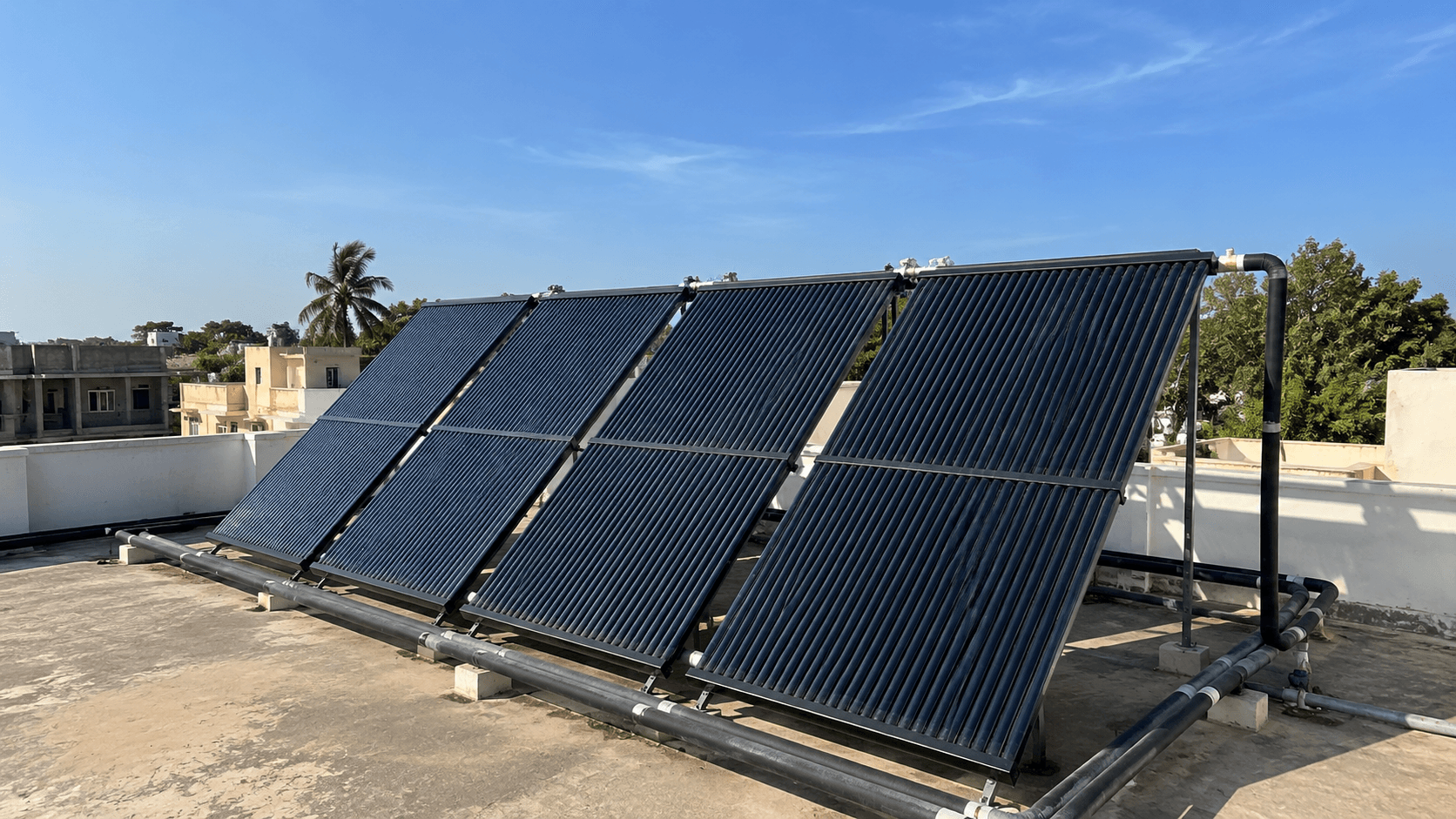
Solar pool heating uses the sun's free energy to warm your water. A pump pushes pool water through dark collector panels, usually on your roof. The panels absorb sunlight and heat the water inside them. The warm water then flows back into your pool. It costs almost nothing to run, but it only works while the sun shines.
Solar shines brightest in sunny regions with plenty of roof space. The panels are simple, quiet, and cheap to operate. The trade-off is control, since you cannot dial up more sun on a grey day.
India's strong sunshine makes solar tempting, and bodies like the Ministry of New and Renewable Energy actively back solar adoption (opens in new tab). Reliability, though, still depends on your weather.
A gas pool heater burns LPG or natural gas to heat your water fast. A pump sends pool water into the heater. Inside, a burner heats a copper coil, and the water passing through it warms quickly. This method ignores the weather completely. It heats a cold pool in hours, but the fuel bill adds up fast.
Gas suits people who swim rarely and want heat on demand. Think of a weekend party or a quick winter dip. The heater warms the water fast, then switches off, so you only pay while it runs.
Gas is the sprinter of pool heating: quick off the mark, expensive over a season. For year-round swimming, the running cost usually rules it out.

For steady, year-round heat, a heat pump beats solar. The swimming pool heat pump vs solar gap is really about weather. A heat pump warms your pool at night, in winter, and under cloud. Solar only performs when the sun is strong. If you swim on a schedule rather than only on sunny days, the heat pump gives far more reliable results.
Solar wins on running cost since sunlight is free. A heat pump wins on control, because it works whenever you switch it on. Many owners in less sunny cities find the heat pump's dependability worth the small electricity bill.
Choose solar if your city is sunny and your swims are flexible. Choose a heat pump if you want a warm pool on demand.
A heat pump costs far less to run than gas. The gas vs heat pump pool heater difference is stark over a full season. Gas burns fuel every minute it runs, so the meter never stops. A heat pump multiplies electricity into several times more heat, so each rupee stretches further. Over a year, the heat pump usually pays back its higher purchase price.
Gas heaters often cost less to buy. Heat pumps cost more at first, then save month after month. When you add up a full swimming season, the cheaper running cost of a heat pump tends to win comfortably.
See the full picture in our breakdown of long-term pool heating savings. The pattern holds: buy cheaper with gas, or save more with a heat pump.
Only a heat pump keeps your pool warm reliably on cloudy days and through winter. Solar stalls without strong sun, so grey weeks leave your pool cool. Gas works in any weather but costs a fortune if you run it daily. A heat pump pulls warmth from the air even on cool, overcast days, which makes it the true all-season choice.
India throws every kind of weather at a pool: blazing sun, monsoon cloud, and chilly northern winters. A system that only works in one of those seasons leaves you swimming less. A heat pump bridges all of them.
Modern air source heat pumps built for India are tuned for exactly this range of conditions. That is why they suit year-round swimmers best.
Here is a clear, at-a-glance comparison of all three pool heaters. Use it to match a system to your budget, climate, and swimming pattern.
| Feature | Heat Pump | Solar | Gas |
|---|---|---|---|
| Running cost | Low | Very low | High |
| Upfront cost | Medium to high | Medium | Low to medium |
| Heating speed | Moderate | Slow | Fast |
| Works on cloudy days | Yes | No | Yes |
| Works in winter | Yes | Limited | Yes |
| Carbon footprint | Low | Lowest | Highest |
| Year-round reliability | High | Weather-led | High |
| Best for | Frequent, all-season swimmers | Sunny regions, flexible swimmers | Rare or on-demand use |
The table makes the trade-offs obvious. Solar is cheapest to run, gas is fastest, and a heat pump gives the best balance of cost and reliability.
The best pool heating in India for most homes is a heat pump. It balances low running cost with all-season reliability, which suits our mix of sun, monsoon, and winter. Solar is a strong second in sunny regions with big roofs. Gas fits only rare, on-demand use. Your ideal pick depends on your climate, your budget, and how often you plan to swim.
There is no single winner for every home. A villa in sunny Rajasthan may lean solar. A home in Delhi's cold winter leans heat pump. A holiday house used twice a year might accept gas.
Compare our full pool and water heat pump range to see sizing options. The right match saves money for years, not just one season.
Running cost depends on your system, pool size, and target temperature. As a directional guide, solar costs the least to run, a heat pump sits in the low-to-moderate range, and gas costs the most per hour. Upfront prices flip the order, with gas often cheapest to buy and solar or heat pumps costing more. Real figures vary by tariff, so treat any quote as a starting point.
Three things move your bill: how warm you keep the water, how often you run the system, and your local energy price. A pool cover cuts heat loss and can slash running costs across every system.
Efficiency ratings matter here, and standards bodies like the Bureau of Energy Efficiency publish useful guidance (opens in new tab). For a tailored estimate, talk to our team with your pool size and location.
Match the heater to how you actually live. Swim often, all year, in a mixed climate? A heat pump gives the best value. Live somewhere sunny with a big roof and flexible plans? Solar rewards you with almost-free heat. Swim rarely and want heat fast on the day? Gas earns its place. Start with your habits, then let cost and climate confirm the choice.
Run through three quick questions. How often will you swim? How sunny is your city? What do you pay for power and gas? Your answers point straight to the right system.
The same efficiency logic drives home heating too. If you are curious, see how heat pumps compare with an AC for a wider view of the technology.
Heat pumps and solar both beat gas on emissions. Solar runs on pure sunlight, so its footprint is close to zero. A heat pump moves existing heat rather than burning fuel, so it emits far less than gas. Newer heat pumps also use low-impact refrigerants that reduce environmental harm even further.
The refrigerant is the fluid that carries heat inside the system. Older types warmed the planet if they leaked. Newer, cleaner options cut that risk sharply while keeping efficiency high.
Our systems use R290 green refrigerant for a lower footprint. The same efficient technology also powers our domestic hot water heat pump for whole-home savings. For the wider standard, the US Department of Energy's pool heating guide is a solid reference (opens in new tab).
"Switched from gas to a heat pump last year and the running cost dropped so much that we now swim every weekend, even in December." — Rohan Mehta, Gurugram
"Solar looked perfect until the monsoon hit and our pool went cold for weeks. A heat pump gave us the reliability we were missing." — Sneha Kulkarni, Pune
"The team helped us size the right unit for our villa pool. Warm water on demand, low bills, no fuss all season." — Vikram Singh, Jaipur
Answer: Yes, over a full season a heat pump is usually much cheaper to run than gas. Gas burns fuel every minute, while a heat pump multiplies electricity into several times more heat. The heat pump's higher purchase price often pays back within a few seasons of regular use.
Answer: Yes, a heat pump can heat a pool in winter across most of India. It pulls warmth from the outside air even on cool days. In very cold northern regions it works harder, so pairing it with a pool cover helps hold heat and keep bills low.
Answer: Solar pool heating works poorly on cloudy days. The collectors need direct sunlight to warm the water, so overcast skies slow heating sharply. During long grey or monsoon spells, a solar-only pool can stay cool for days, which is why many owners add a heat pump.
Answer: A heat pump is best for India's mixed climate for most homes. It handles sun, cloud, and winter reliably while keeping running costs low. Solar suits consistently sunny regions with large roofs, and gas fits only rare, on-demand use where running hours stay very low.
Answer: Gas is fastest and warms a cold pool in a few hours. A heat pump is moderate and raises temperature steadily over a day or so. Solar is slowest and depends on sunlight. A pool cover speeds up every system by trapping heat overnight.
Answer: Yes, pool heat pumps are far greener than gas heaters. They move existing heat instead of burning fuel, so they emit much less carbon. Newer models use cleaner refrigerants that lower the impact further, making them one of the greenest heating choices after solar.
Answer: Heating a pool in India comes down to your climate, your budget, and how often you swim. A heat pump gives the best all-round mix of low running cost and year-round reliability. Solar rewards sunny regions, and gas suits only rare, fast heating. Choose the system that matches how you actually live, and you will enjoy warm water for years without bill shock.
Ready to size the right system for your pool? Explore the full range at Hyundai Heat Pumps and get a recommendation built around your pool, your city, and your budget.
No related articles found.
Heat Pump for Hospitals: A Guide to Reliable and Energy-Efficient Hot Water Systems
11 September 2026
Heat Pump for Hotels: How to Reduce Hot Water Energy Costs Without Compromising Guest Comfort
10 September 2026
Heat Pump Maintenance Guide: How to Keep Your System Efficient and Reliable
02 September 2026
Heat Pump Water Heater for Home: How to Choose the Right System for Your Household
02 September 2026
Heat Pump Water Heater Installation: Requirements, Process and Key Considerations
02 September 2026

Dehumidifier vs Air Conditioner: Which Is Right for You?
24 July 2026
No related articles found.