Author: Hyundai Heat Pump
Published on: 16 October 2026
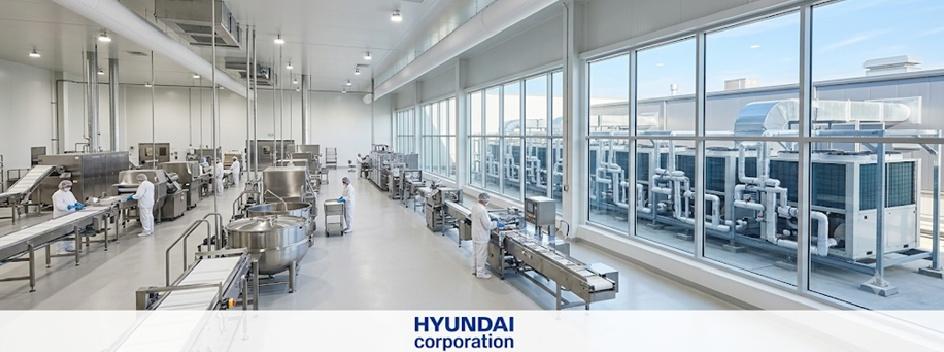
Food plants heat water all day for washing, cleaning and cooking, and part of that heat leaves through drains and exhaust. A heat pump for food processing industry sites can recover some of it and reuse it where temperatures allow.
This guide shows where plants use heat, which steps suit a heat pump, and how to test feasibility before you invest.
Plants use heat for cleaning, washing, cooking, pasteurisation, drying and boiler feedwater. Most of it is low to medium temperature. A 2023 report for WWF found about 97% of US food and beverage process heat sits below 130°C, mainly for pasteurisation, cleaning and drying, as Utility Dive reported. Indian plants differ by product and process, so measure your own load first.
Start with streams that are hot, steady and close to a place that needs heat.
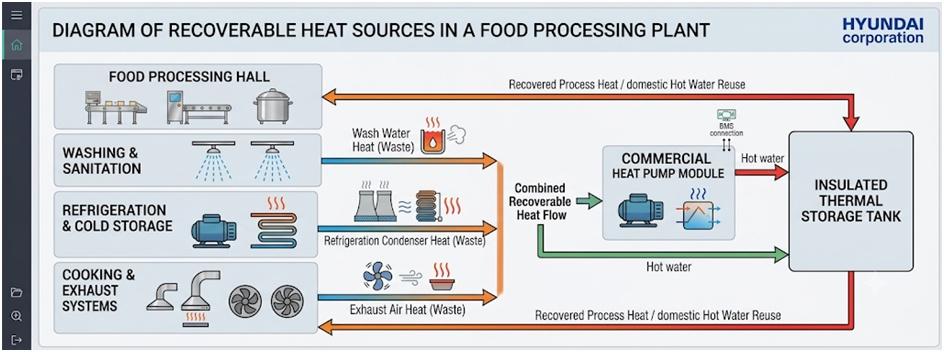
Food processing heat recovery captures heat from a warm stream and delivers it where the plant needs it. A heat exchanger works when the source is hotter than the demand. A heat pump lifts cooler heat to a useful temperature, using electricity to move heat instead of creating it. Storage tanks smooth out batch cycles.
Matching source to demand decides whether a project works.
Steps that need hot water at moderate temperatures are the strongest fit. Cleaning and washing duties often fall between about 30°C and 85°C, depending on the plant. Pasteurisation, cooking, frying and evaporation can need more. Above 100°C, heat pumps are not yet widely available as direct boiler replacements. Judge each step on its own.
| Process step | Typical heat need | Heat pump fit |
|---|---|---|
| Fresh water pre-heating | Below about 60°C | Good candidate |
| Washing and cleaning water | Roughly 30–85°C, by plant | Often suitable; check the setpoint |
| Boiler feedwater pre-heating | Varies by boiler | Practical first step |
| Pasteurisation and heat treatment | About 70–100°C, by product | Depends on product and model |
| Evaporation, frying, baking | Often above 100°C | Needs high-temperature systems |
A step-by-step process map prevents expensive mismatches.
The outlet temperature you need drives compressor choice, refrigerant and cost, so industrial heat pumps for food manufacturing vary widely by duty. Hyundai's RS Series commercial heat pump delivers hot water up to 60°C, so it suits pre-heating and hot-water duties within that range. Higher temperatures need a different class of machine. The IEA's Heat Pump Monitor 2026 describes heat pumps as still niche in industry, with high-temperature machines approaching commercial roll-out.
Hybrid designs keep production safe because nothing depends on one machine.
Food safety comes first. Recovered heat should usually reach food-contact water only through a heat exchanger, so refrigerant and process water never mix. Materials, piping and tanks must suit your cleaning routine and HACCP plan. Production cannot stop for maintenance. Confirm requirements with your food safety team and auditor before design starts.
Hygiene rules shape the layout, so raise them early.
Start with measurement, not a quotation. Log flow, temperature and timing for every hot stream and every heat demand across several production weeks. Then match sources to uses, size storage and confirm electrical capacity. Pilot one line before going plant-wide. Use our heat pump ROI guide for first estimates, and review the installation requirements early.
A written feasibility review protects your budget.
The RS Series offers 18–192 kW, with up to 16 units in cascade under one central control. It runs from -15°C to 43°C ambient and supports MODBUS RS-485 for building management systems. It is an air-source water heater, so designs that draw heat from effluent or refrigeration need a project-specific review with Hyundai's engineers.
Energy-efficient heating for food processing plants starts with matching each duty to the right temperature and source. Explore the full product range, read the broader industrial heat pump guide, or see how hospitals handle 60°C hygiene-critical hot water.
Can a heat pump be used in a food processing plant? Yes, for suitable steps such as pre-heating, washing and some hot-water duties. Steps above the machine's temperature need separate assessment.
What temperatures do food processing plants need? It varies by step. Cleaning and washing often fall between about 30°C and 85°C, while heat treatment and cooking can need more. Confirm with your process team.
Can a heat pump replace a boiler in a food plant? Sometimes, for hot water duties. Steam and high-temperature steps may still need a boiler or a high-temperature heat pump.
Where does recoverable heat come from in food plants? Common sources include wash water, refrigeration condensers, exhaust air and warm condensate. Each needs measuring before design.
Is a heat pump safe around food-contact water? Yes, when designed correctly. Use indirect heat exchange so refrigerant never touches process water, and follow your HACCP plan.
Share your hot water load, process temperatures and shift hours. Hyundai's team can review whether a heat pump fits your process. Talk to an engineer to start a site assessment.
No related articles found.

Heat Pump BMS Integration: A Smarter Approach to Commercial Heating Control
16 October 2026
Heat Pump for Textile Industry: Opportunities for Heat Recovery in Textile Manufacturing
29 September 2026
Heat Pump for Apartments: How to Plan an Efficient Centralized Hot Water System
24 September 2026

Heat Pump vs Solar Water Heater: Which Is Right for You?
24 September 2026
Heat Pump for Hospitals: A Guide to Reliable and Energy-Efficient Hot Water Systems
11 September 2026
Heat Pump for Hotels: How to Reduce Hot Water Energy Costs Without Compromising Guest Comfort
10 September 2026
No related articles found.