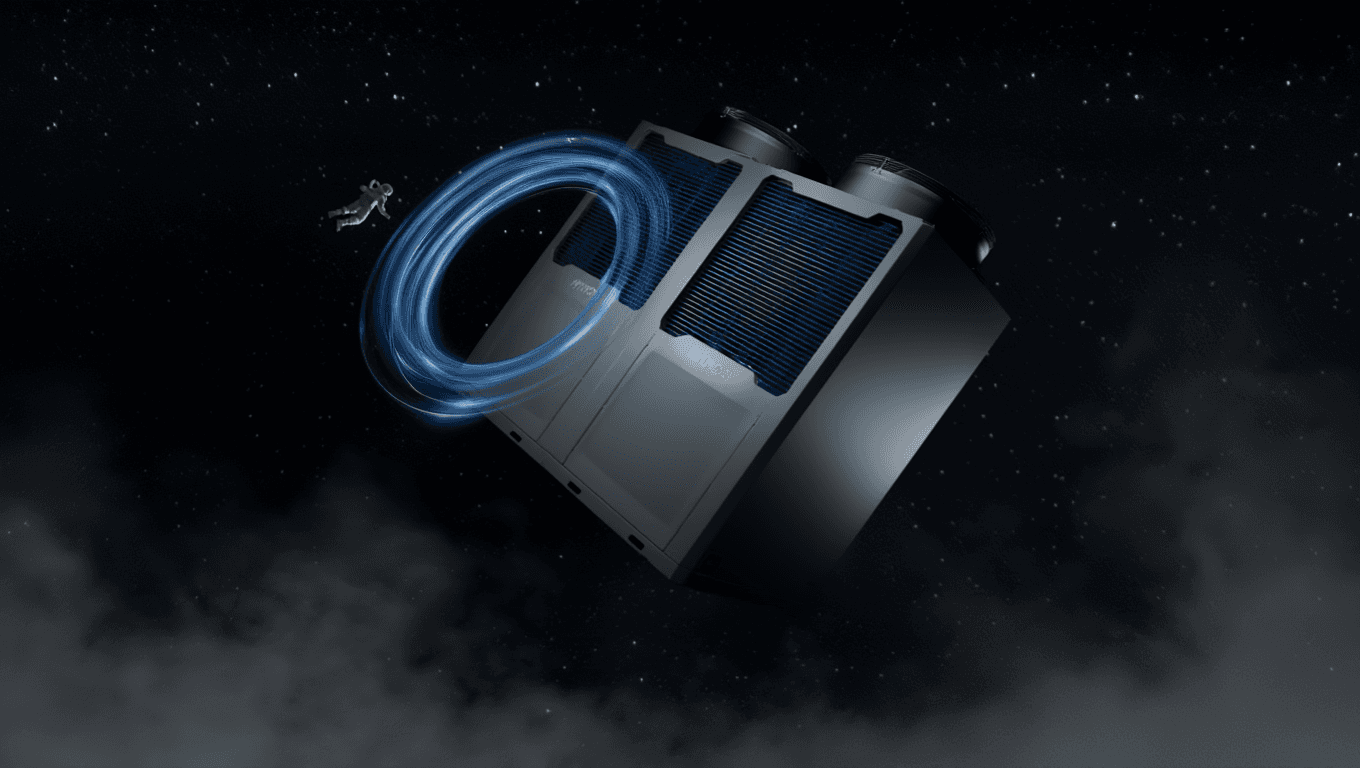
CozyQuiet is Hyundai's low-noise heat pump design — combining variable-speed inverter operation, a sound-dampening housing, an optimised fan and anti-vibration mounting to keep running noise low. It delivers efficient hot water without the intrusive hum of older outdoor units, which makes it well suited to apartments, balconies and homes where the unit sits close to living and sleeping spaces.
Efficiency means very little if a unit growls outside your bedroom window at six in the morning. For many buyers — especially in dense Indian housing — noise is the quiet dealbreaker that doesn't show up in a brochure until the unit is installed and humming next to a neighbour's balcony. CozyQuiet is built around the opposite outcome: a heat pump that fades into the background, so you get the hot water and the savings without a constant reminder that the machine is there.
This page explains what makes a heat pump quiet, why it matters so much in Indian homes specifically, how installation choices affect noise, and whether running quietly costs you any performance.
A quick note on honesty: low-noise design and the exact sound level can vary by model, so check the specification sheet of the unit you're considering for its sound rating, and treat the comparisons here as a guide to how quiet operation feels in practice.
CozyQuiet is the name for the set of design choices that keep a Hyundai heat pump running quietly. It isn't one feature — it's several working together, from the compressor through to how the unit is mounted.
A water heater isn't a once-a-day appliance you can ignore — it cycles on and off throughout the day and night to keep hot water ready. If it's loud, that's a sound you live with constantly. In a standalone house with a large garden, an outdoor unit's noise might disappear into the distance. In an Indian apartment, a row house, or a home where the unit sits on a small balcony or a shared wall, it doesn't. Noise becomes part of daily life — and a source of friction with neighbours. Designing for quiet operation isn't a luxury in that context; it's what makes the appliance comfortable to live with.
Sound levels are measured in decibels (dB(A)), and the practical thing to understand is the comparison. A well-designed low-noise heat pump runs at a level closer to a quiet conversation or the soft background hum of a room than to the harsh drone of an old, fixed-speed outdoor unit. The goal of CozyQuiet is for the sound to be the kind you stop noticing — present but unobtrusive, rather than something that intrudes on a quiet evening or disturbs sleep. For the exact figure on a specific model, check its rated sound level on the specification sheet.
Quiet operation comes from tackling noise at every source — the compressor, the fan, vibration, and the casing that contains it all.
Runs at lower, steady speeds instead of loud on/off cycling
Moves air efficiently at lower rotational speed and noise
Reduces structural buzz and rattle transferred to walls and floors
Insulating materials absorb and contain operating noise
The compressor is usually the loudest part of any heat pump, and how it runs makes the biggest difference to noise. A fixed-speed compressor works like a light switch — fully on or fully off — and every time it switches on, there's a surge of sound. An inverter compressor instead varies its speed, ramping gently up and down to match demand. It spends most of its time running at lower, steady speeds rather than slamming on at full power, which is dramatically quieter. This is the same variable-speed technology that makes inverter units more efficient — quieter and more economical from the same design choice. Hyundai's inverter range, including the inverter swimming pool heat pump , is built around this principle, and you can read more about how that intelligent control works on the smart control page.
After the compressor, the fan is the next big noise source — it's the part you hear as a continuous airflow whoosh. An optimised fan moves the air the unit needs while spinning slower and shaping airflow to minimise turbulence, which is what creates noise. A better-designed fan blade and a lower rotational speed mean the unit can do the same job with far less of that whooshing drone, which is especially noticeable at night when ambient sound is low.
A lot of the noise people complain about isn't airborne sound at all — it's vibration. A running compressor and fan create small vibrations, and if the unit is bolted rigidly to a wall or floor, those vibrations transfer into the building structure and turn surfaces into sounding boards, producing a low buzz or rattle that can carry through walls. Anti-vibration mounting — rubber feet, isolating pads and proper bracketing — absorbs those vibrations before they reach the structure, removing a whole category of noise that's particularly intrusive in apartments where walls and floors are shared.
The unit's casing isn't just a cover — a well-designed housing uses insulating and sound-dampening materials to absorb noise generated inside and stop it radiating out. Think of it as a barrier that keeps the mechanical sound contained within the unit rather than broadcasting it to the surroundings. Together with the quieter compressor, fan and mounting, the housing is the final layer that keeps the overall sound footprint low.
Indian housing makes the case for quiet operation more strongly than almost anywhere — homes are close together, units are installed in tight spaces, and neighbours are near.
In a large share of Indian homes, the outdoor unit doesn't go in a spacious yard — it goes on a balcony, a parapet, a window ledge, or a small utility area, often just feet from a window or a neighbour's. In those positions, even a moderately noisy unit becomes a constant presence indoors and next door. A quiet unit is what makes balcony and compact installation genuinely livable, rather than a daily irritation you regret. For homes where space is tight, low noise isn't a bonus feature — it's what makes the installation work at all.
This is one of the most common real-world concerns, and a legitimate one. In closely packed housing and apartment societies, a loud outdoor unit can create friction with neighbours and even fall foul of housing-society norms about noise. CozyQuiet's combination of a quieter compressor, optimised fan, contained housing and anti-vibration mounting is specifically aimed at keeping the unit's noise within neighbourly limits, so your hot water doesn't come at the cost of a complaint from next door.
Because a water heater runs at night too. If the unit is anywhere near a bedroom — and in compact homes it often is — its noise directly affects sleep. The cycling of a loud compressor or the drone of a fast fan in the early hours is exactly the kind of low, repetitive sound that disturbs rest. A quiet heat pump keeps working through the night without becoming the reason you wake up, which is a comfort benefit that's easy to overlook until you've lived with a noisy one. This is why quiet operation is treated as part of overall comfort in our Tenfold Comfort Control approach — comfort you don't have to hear.
A common and reasonable worry is that quieter must mean weaker. With CozyQuiet, the opposite is true.
No. The features that make the unit quiet are not about throttling it down — they're about running it more intelligently. The inverter compressor is quiet because it modulates smoothly rather than slamming on and off, and that same modulation is what makes it efficient and capable of holding steady output. A better fan and mounting reduce noise without reducing the unit's ability to move heat. Quiet and capable come from good engineering, not from compromise.
Because they share the same root cause. Variable-speed inverter operation reduces noise and improves efficiency simultaneously — it's not a trade-off where you sacrifice one for the other. A unit that avoids loud, energy-hungry full-power start-ups in favour of gentle, steady running is both quieter and cheaper to run. So the technology that delivers a peaceful home also delivers the 60–70% energy savings over a conventional geyser that make heat pumps worth buying in the first place. The underlying efficiency mechanism is explained in our guide on how a heat pump works.
The unit's design sets the baseline, but how and where it's installed has a big effect on how quiet it actually feels in your home.
Placement is the most powerful free noise-reduction tool you have. Positioning the unit away from bedroom and living-room windows, avoiding tight enclosed corners that can amplify and reflect sound, and keeping it clear of a neighbour's adjoining wall all make a real difference to perceived noise. A good installer will weigh airflow, serviceability and sound together when choosing the spot — it's worth raising noise as a priority during installation rather than discovering the issue afterwards.
Beyond placement, a few choices help: ensuring the unit is mounted on a solid, level surface so it doesn't add its own rattle, using the proper anti-vibration brackets and pads rather than rigid fixing, leaving adequate clearance around the unit for free airflow (a starved unit works harder and louder), and keeping the area clear of loose objects that could buzz against the casing. None of these are exotic — they're the difference between a quiet unit installed well and a quiet unit installed carelessly. Discuss them with your installer up front. For how air-source units behave in Indian conditions generally, our air-source heat pump guide is a useful background read.
Quiet running isn't a standalone feature — it completes the comfort picture. Precise temperature, consistent supply and all-weather reliability give you the hot water you want; quiet operation means you enjoy all of it without an intrusive hum in the background. CozyQuiet pairs naturally with Tenfold Comfort Control and the unit's intelligent operation: comfort you can set precisely, that runs efficiently, and that you never have to hear. In a home, the appliances you notice least are usually the ones doing their job best — and that's exactly the experience CozyQuiet is designed to deliver.
Low-noise design is part of how Hyundai's heat pumps are built to live comfortably in real homes, including the domestic hot water heat pump and air-to-water heat pump for households, and inverter-driven systems like the swimming pool heat pump. To see where each model sits in the wider range, start with our main heat pump guide, and check the rated sound level on the specification sheet for the exact model you choose.
•A low-noise CozyQuiet heat pump is designed to run at a level closer to a quiet conversation or soft background hum than to the harsh drone of an old fixed-speed unit. For the exact figure, check the rated sound level in dB(A) on the model's specification sheet.
•It's designed not to. The combination of a quieter inverter compressor, an optimised fan, a sound-dampening housing and anti-vibration mounting is specifically aimed at keeping noise within neighbourly limits — important in apartments and closely packed housing. Sensible placement during installation reduces it further.
•No. The inverter technology that keeps the unit quiet is the same technology that makes it efficient and capable of steady output. Quiet operation comes from running intelligently, not from throttling the unit down, so low noise and good performance come together.
•A fixed-speed compressor switches fully on and off, producing a surge of noise each time it starts. An inverter compressor varies its speed and runs mostly at lower, steady levels, avoiding those loud start-ups. This variable-speed operation is the main reason inverter units are noticeably quieter.
•Place it away from bedroom and living-room windows, avoid tight enclosed corners that reflect and amplify sound, keep it clear of a neighbour's adjoining wall, mount it on a solid level surface with proper anti-vibration brackets, and leave enough clearance for free airflow. Raise noise as a priority with your installer when choosing the spot.
•A quiet, inverter-driven heat pump operates on similar principles to a modern inverter air conditioner and is designed for low-noise running. How loud either feels depends heavily on the specific model's rating and on installation placement. Our heat pump vs AC guide covers the broader comparison.
•Quiet night-time running is exactly what CozyQuiet's low-noise design is built for, since a water heater cycles through the night to keep hot water ready. Good placement away from bedrooms makes night operation effectively unnoticeable. If your specific model offers a dedicated low-noise or night mode, its specification sheet will note it.
•No special maintenance, but a little care helps. Keeping the unit clear of debris, ensuring its mounting stays firm over time, and having the fan and surrounds checked during routine servicing all keep the unit running as quietly as it did on day one. Loose fittings or a debris-obstructed fan are the usual culprits if a quiet unit gets noisier with age.