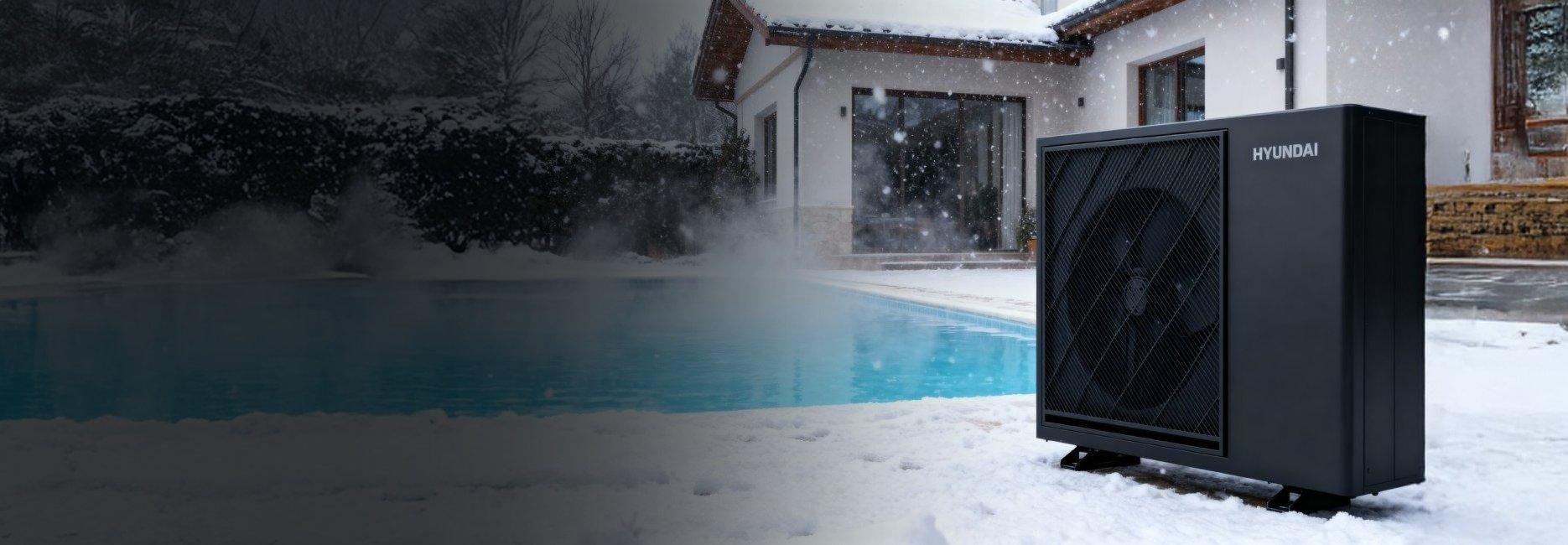
Tenfold Comfort Control describes the many dimensions a heat pump manages to give you exactly the hot water you want — precise temperature, consistent supply, selectable modes, scheduling, all-weather reliability, quiet running and energy-efficient delivery. A geyser gives you hot water eventually; a Hyundai heat pump gives you control over how that hot water arrives — the temperature, the timing, the consistency, and the cost.
Comfort isn't a single setting. The water that's perfect for a baby's bath is too cool for a winter shower; the supply that suits a couple won't stretch to a joint family; the heater that's fine in October has to keep performing through a January morning. Real comfort means the system adapts to all of that — and keeps doing it without you fiddling with controls every day. That's what "tenfold" points to: comfort controlled across many dimensions at once, not just an on/off switch and a guess.
This page covers each of those dimensions in turn, why they matter in Indian homes specifically, and how they add up to hot water that simply works the way you want it to.
A quick honesty note: comfort features can vary by model, so treat this as an explanation of what heat pump comfort control involves, and check the specification sheet of the exact unit you're considering for its specific feature set.
The name captures a simple idea — that comfortable hot water is the result of many controls working together, not one.
A basic geyser is binary: it heats until a hidden thermostat stops it, then heats again when the water cools. You can't fine-tune the temperature, you can't tell it when to work, you can't trade speed for savings, and it has no awareness of the weather outside. A heat pump is a controllable system rather than a switch. It can hold a precise temperature, run in different modes, follow a schedule, adapt to the season, and do all of it efficiently and quietly. More control means the appliance bends to your routine instead of the other way around.
It's worth laying these out up front, because together they're what "tenfold" refers to.
Set an exact temperature, not a vague dial
Steady hot water from first use to last
Switch between economy, comfort and fast heating
Get hot water quickly when you need it
Heat at the times that suit your day
Reliable performance across the seasons
Uninterrupted hot water in cold conditions
Flexibility for different needs
Comfort you don't have to hear
All of the above at low running cost
The rest of this page expands on the most important of these.
Temperature is where comfort starts, and where a heat pump pulls clearly ahead of an ordinary heater.
Yes. Rather than a "warm-to-hot" knob you have to guess with, a heat pump lets you choose a specific target temperature. That precision matters more than it sounds. A few degrees is the difference between water that's comfortable for a child and water that's too hot; between a shower that's perfect and one you have to keep adjusting at the tap. Setting an exact number once, and having the unit honour it, removes a small daily annoyance most people never realised they could be rid of.
Setting a temperature is only half of it; holding it is the other half. A heat pump's intelligent control works to maintain your set temperature as conditions change through the day — as the surrounding air warms and cools and as your hot-water demand rises and falls. The result is hot water that's consistent in the morning and the evening, rather than scalding at one time and lukewarm at another. This steady self-regulation is also efficient, because holding a stable temperature with minimal overshoot wastes the least energy. You can read how the unit's intelligence does this on the smart control page.
Consistency is the comfort dimension people notice most — usually by its absence.
The frustration with an undersized or slow heater is that the comfort runs out — the first shower is great and the last one is cold. A heat pump system sized correctly for your household is designed to deliver a steady supply so that the last person in the queue gets the same comfortable hot water as the first. Combined with consistent temperature control, that means no cold surprises during the morning rush.
Comfort depends heavily on matching the unit to how many people use hot water and how. A small household has very different needs from a large joint family, and bathing patterns, number of bathrooms, and peak-time demand all matter. The right capacity is the single biggest factor in whether a system feels "always enough" or "occasionally short" — so it's worth getting guidance on sizing rather than guessing. Our domestic hot water heat pump and air-to-water heat pump ranges cover different household sizes, and for larger or shared requirements the domestic & commercial range extends further.
Modes are how you tell the heat pump what matters most to you on a given day — saving money, getting hot water fast, or balancing both.
Lowest running cost; everyday use when you're not in a hurry
A balance of speed and efficiency for normal daily routines
Maximum heating speed when you need hot water quickly
Economy mode prioritises the lowest possible energy use, letting the heat pump heat water gently and efficiently when there's no rush. For most of daily life — water heated ahead of predictable bath times — Eco mode gives you all the comfort you need at the lowest running cost. It's the setting that quietly keeps your bills down without you thinking about it.
Boost mode is for the moments comfort can't wait — unexpected guests, a child who needs a bath now, a cold day when everyone wants hot water at once. It directs the unit to heat as quickly as it can, trading a little efficiency for speed. Having that option means you're never stuck choosing between an efficient heater and a fast one; you get both, depending on the day.
The point of modes is that you, not the appliance, decide the trade-off. On an ordinary day, Eco keeps costs low. When you need speed, Boost delivers. The flexibility to shift between them — and to leave it on Comfort for everyday balance — means the same unit serves a frugal week and a hectic one equally well.
Scheduling is where comfort and savings meet most neatly.
Programmable scheduling lets you set the heat pump to have hot water ready at the times you actually need it — before the morning rush, before evening baths — rather than you waiting for it to catch up. Comfort that's ready when you are is comfort you never have to plan around. Once set, the unit simply has hot water waiting at the right moments, day after day.
The same scheduling that improves comfort also cuts cost, because you can align heating with cheaper off-peak electricity where your board uses time-of-day pricing, and you avoid maintaining a hot tank around the clock for water you won't use. Comfort that's also cheaper is the best kind. For the full cost picture against a conventional geyser, see our cost comparison.
Indian comfort has to survive both extremes — and a heat pump is built to.
In warm conditions a heat pump is in its element. It draws heat from warm ambient air, which is exactly what it's designed to do, so summer is when it runs most efficiently. You get abundant hot water at the lowest running cost of the year — comfort and economy together. For how a heat pump compares to other options as a year-round appliance, our heat pump vs AC guide is a useful read.
Cold weather is the real test of comfort, and it's where a heat pump's adaptive control earns its place. The system keeps extracting usable heat from the air even as temperatures fall, maintaining your hot water supply through the season. For genuinely cold regions — the north, the hills, frosty plains mornings — this all-weather capability is what makes a heat pump a true year-round heater rather than a fair-weather one. Our explainer on air-source heat pumps in India covers cold-climate performance in detail.
In cold, humid conditions, frost can form on the outdoor coil and reduce performance. Intelligent defrost clears it automatically — and only when actually needed — so your hot water supply stays uninterrupted through winter without you ever noticing the work going on. From a comfort standpoint, its job is to make cold weather invisible to you.
Comfort isn't only about water — it's about the whole experience of living with the appliance. A unit that growls outside a bedroom window undermines the comfort it's supposed to provide. Quiet, low-noise running means the heat pump fades into the background, delivering hot water without an intrusive hum, which matters especially in apartments and homes where the unit sits close to living spaces. This is the focus of our CozyQuiet design — comfort you can set precisely, and never have to hear.
With most appliances, more comfort means more cost — turn it up, pay more. A heat pump breaks that link. Because it moves heat rather than generating it from scratch, it delivers all this comfort while using roughly 60–70% energy savings over a conventional geyser . Precise temperature, consistent supply, fast boosts, all-weather reliability — none of it comes at the running cost you'd expect, because the underlying technology is simply far more efficient. That's what makes "energy-efficient comfort" the tenth and unifying dimension: it's the quality that lets all the others happen without a painful bill. The mechanism behind that efficiency is explained in our guide on how a heat pump works.
India is not one climate, and a water heater here has to serve a humid Chennai afternoon and a freezing Shimla morning from the same hardware. All-weather operation, intelligent defrost, wide temperature range and self-regulating control are exactly the features that let one unit adapt across that spread without the owner constantly adjusting it. The comfort travels with you whether you're on the coast, the plains, or in the hills.
Indian routines vary enormously — early-rising joint families, dual-income couples with evening peaks, homes that empty out for festivals and weddings. Programmable scheduling, selectable modes and consistent supply let the same heat pump shape itself around any of these patterns. You configure it once for your life, and it delivers comfort on your schedule rather than a generic one.
Pulling it together, "tenfold comfort control" comes down to these ten dimensions working as one system: precise temperature setting; consistent, steady supply; selectable operating modes; fast boost heating; programmable scheduling; all-weather operation; intelligent defrost; a wide temperature range; quiet running; and energy-efficient delivery underpinning all of it. Individually, each is a useful feature. Together, they're the difference between a heater you tolerate and hot water that simply works the way you want, every day, in every season, at a cost that doesn't sting.
Comprehensive comfort control runs across Hyundai's water-heating range, from the domestic hot water heat pump and air-to-water heat pump for homes to pool systems like the inverter swimming pool heat pump, where precise temperature and scheduling are just as valuable. To see where each model fits in the wider lineup, start with our main heat pump guide, and confirm the specific comfort features on the specification sheet of the model you choose.
•Yes. Rather than a vague warm/hot dial, a heat pump lets you choose a specific target temperature and holds it steadily, so your hot water stays consistent through the day.
•Modes let you choose what matters most on a given day. Economy mode keeps running costs lowest, Comfort mode balances speed and efficiency for everyday use, and Boost mode heats water as fast as possible when you need it in a hurry.
•Yes, provided the unit is correctly sized for your household. A properly sized system delivers a steady supply so the last person gets water as hot as the first. It's worth getting sizing guidance based on your family size and number of bathrooms.
•Yes. Programmable scheduling lets you set heating to run at the times you actually need hot water, which improves daily comfort and lets you align consumption with cheaper off-peak electricity rates.
•Yes. All-weather operation and intelligent defrost keep hot water flowing reliably through winter, including in colder northern and hill regions of India, so it's a genuine year-round appliance.
•No. Because a heat pump moves heat rather than generating it from scratch, it delivers precise, consistent, all-weather comfort while using far less electricity than a conventional geyser — typically 60–70% less.
•Quiet operation is part of the comfort design. A low-noise heat pump runs unobtrusively, which matters in apartments and homes where the unit is close to living and sleeping areas.
•Set your preferred temperature once, use scheduling to match your routine, choose Eco for everyday savings and Boost when you need speed — and make sure the unit is correctly sized for your household from the start.