Author: Hyundai Heat Pump
Published on: 29 September 2026
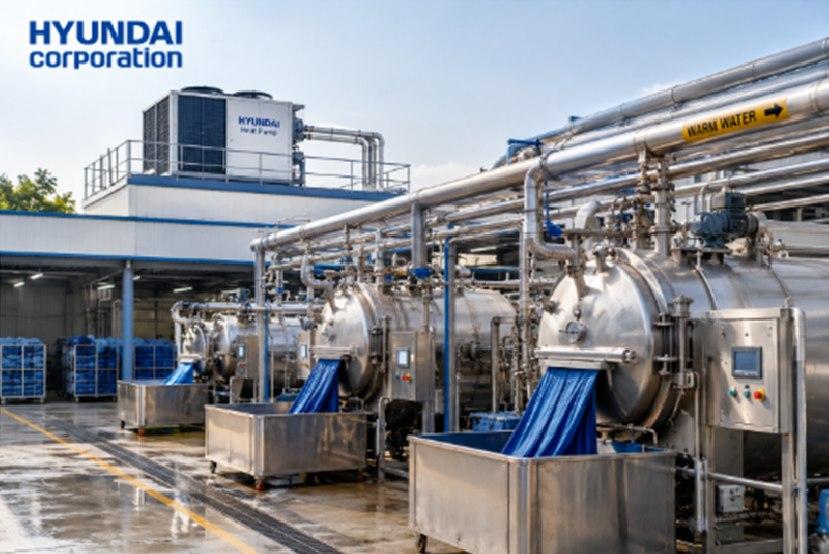
Textile mills heat huge volumes of water, then send much of that heat down the drain. A heat pump for textile industry plants can recover part of it and put it back to work.
This guide shows where the opportunities are, and where they are not. You will learn which processes suit heat pumps, which temperatures matter, and how to test feasibility before you spend.
A heat pump moves existing heat instead of burning fuel to create new heat. Textile wet processing covers dyeing, bleaching, washing, and finishing. It needs steady hot water and steam all day. That makes it a natural place to look for recoverable heat. Many Indian plants still rely on fuel-fired boilers, so the upside deserves a proper study.
An India-focused textile electrification study by Global Efficiency Intelligence reports the fuel mix for wet processing.
Before choosing equipment, find out where your plant actually loses heat.
The largest source is usually hot wastewater from dyeing and washing. Research describes textile wastewater as a large stream carrying significant heat. Plants often have to cool it before treatment anyway. Recovering that heat can cut fresh-water heating demand and cooling load together. Other sources depend on the plant layout and ducting.
Start with streams that are hot, steady, and close to a place that needs heat.
Batch timing matters. Drains arrive in bursts, so a storage tank often sits between source and heat pump.
Steps that need hot water below about 100°C are the strongest fit. Published work puts dyeing water at roughly 60–95°C. Steam-based drying and finishing usually need high-temperature machines, which cost more and come from fewer makers. Flame-based steps like singeing are not candidates. Judge each step on its own.
| Process step | Typical heat need | Heat pump fit |
|---|---|---|
| Fresh water preheating | Below 60°C | Good candidate |
| Dyeing and washing water | About 60–95°C | Depends on model and design |
| Steam-based drying | Steam, often above 100°C | Needs high-temperature system |
| Singeing | Open flame | Not suitable |
A step-by-step process map prevents expensive mismatches later.
It depends on the model. The IEA says large-scale industrial heat pumps are well established up to 150°C. Standard commercial water heat pumps deliver less. Hyundai's RS Series commercial heat pump reaches hot water up to 60°C. Match the machine to the step.
Many plants use the heat pump for the first temperature lift, then finish with existing equipment.
Hybrid designs cut risk because production never depends on one machine.
It can, but only your site data can prove it. The India study above found steam-generating heat pumps had lower lifetime heating cost than new coal boilers for a typical plant, despite higher upfront cost. The IEA also warns that heat pumps struggle while cheap domestic coal is available. Run the numbers on your own fuel, tariff, and operating hours.
Treat published figures as ranges to test, not promises.
Low adoption today means early movers can learn first, but also carry the learning cost.
Start with measurement, not a quotation. Log flow, temperature, and timing for every hot stream and heat demand over several weeks. Then match sources to uses, size storage, and confirm electrical capacity. Pilot one line before going plant-wide. A written feasibility review protects your budget.
Use the heat pump ROI calculator guide for first estimates, and read the installation requirements before site work begins.
The RS Series offers 18–192 kW capacity, with up to 16 units in cascade under one central control. It operates from -15°C to 43°C ambient and supports MODBUS integration for monitoring. It suits preheating and hot-water duties within its 60°C range. Higher temperatures or effluent-source designs need a project-specific review with Hyundai's engineers.
Explore the full Hyundai product range, compare domestic vs commercial systems, or read the wider industrial heat pump guide.
Can a heat pump be used in the textile industry? Yes, for suitable steps. Hot water preheating and some dyeing and washing duties are the usual candidates. Steam-based and flame-based steps need separate assessment.
What temperature do textile dyeing processes need? Published studies cite roughly 60–95°C for dyeing water. Exact needs vary by dye, fibre, and recipe, so confirm with your process team.
Can a heat pump replace a boiler in a textile mill? Sometimes for hot water. Steam and high-temperature steps may still need a boiler or a high-temperature heat pump.
How is heat recovered from textile wastewater? A heat exchanger captures heat from warmer streams. A heat pump upgrades cooler streams. Research plants often combine both, with storage tanks between them.
Share your hot-water load, process temperatures, and shift hours. Hyundai's team can review whether a heat pump fits your process. Talk to an engineer to start a site assessment.
No related articles found.

Heat Pump BMS Integration: A Smarter Approach to Commercial Heating Control
16 October 2026

Heat Pump for Food Processing Industry: Where Heat Recovery Can Improve Plant Efficiency
16 October 2026

Heat Pump for Apartments: How to Plan an Efficient Centralized Hot Water System
24 September 2026

Heat Pump vs Solar Water Heater: Which Is Right for You?
24 September 2026
Heat Pump for Hospitals: A Guide to Reliable and Energy-Efficient Hot Water Systems
11 September 2026
Heat Pump for Hotels: How to Reduce Hot Water Energy Costs Without Compromising Guest Comfort
10 September 2026
No related articles found.