Author: Hyundai Heat Pump
Published on: 10 July 2026
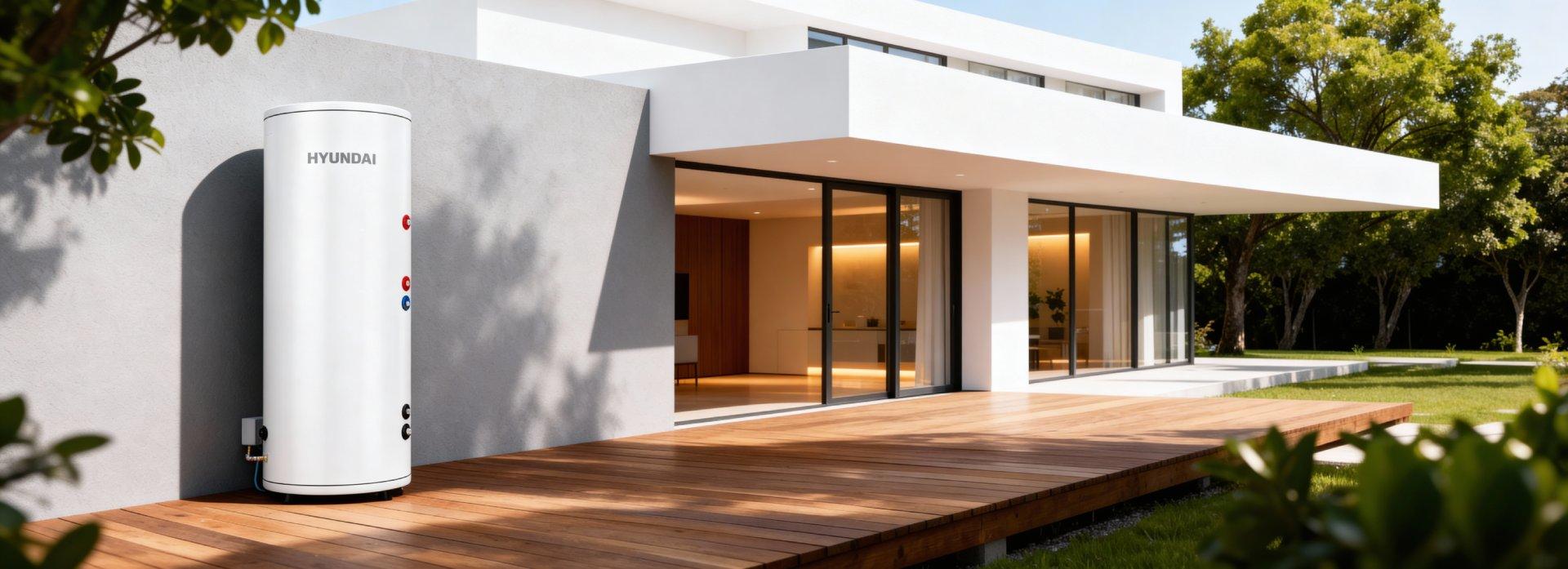
Choosing between an air to water vs air to air heat pump feels confusing because both pull heat from the same place — the outside air. The difference is what each one does with that heat. And that single choice shapes your comfort, your hot water, and your monthly bills.
This guide breaks down how each type works, where each one shines, and which suits Indian homes for hot water, heating, and cooling.
An air-to-water heat pump moves heat from outside air into water. That warm water feeds radiators, underfloor pipes, or a storage tank for baths and taps. An air-to-air heat pump sends heat straight into the air inside your rooms, much like a reverse-cycle AC. One heats water. The other heats and cools air.
Both systems share the same core trick. A fan pulls in outdoor air, a refrigerant captures its warmth, and a compressor boosts it. The split happens only at the final step — where that heat actually lands.
So the source is identical, but the output splits your options. Water gives you baths plus gentle whole-home warmth. Air gives you fast heating with the cooling most Indian homes crave.
An air-to-water heat pump captures heat from outdoor air and transfers it into a water loop. That heated water then flows to a hot water cylinder, radiators, underfloor pipes, or fan coil units. It works even in cold weather because refrigerant absorbs heat far below freezing.
The process runs on a simple, closed refrigerant loop. Understanding these steps helps you see why one unit can replace a gas boiler and an electric geyser at once. Here is how the heat actually travels.
For a deeper look at the refrigerant cycle, see our full explainer on how a heat pump works. The takeaway is simple: this system quietly makes hot water and heating from air, using a fraction of the electricity a geyser needs.
An air-to-air heat pump pulls heat from outside air and blows it directly into your rooms as warm air. Flip the cycle in summer, and the same unit removes indoor heat to cool the space. If you know how a split AC works, you already know this system.
Air-to-air setups look almost identical to inverter air conditioners. An outdoor unit connects by refrigerant lines to one or more indoor wall units. A reversing valve is the clever part — it switches the flow direction on demand.
Because there is no water loop, air-to-air responds fast and installs simply. If it sounds a lot like an air conditioner, see exactly how a heat pump compares with an AC. The trade-off is clear too: it cannot make hot water for your bathroom or kitchen.
Only the air-to-water heat pump makes domestic hot water. It stores heated water in an insulated tank, ready for showers, taps, and kitchen use. An air-to-air unit heats and cools room air only — it cannot fill a geyser tank. For hot water, air-to-water wins outright.
Most Indian households run electric geysers that guzzle power every morning. An air-to-water heat pump water heater does the same job using roughly a third of the electricity. That gap turns into real savings across a full year.
Compare options in Hyundai's domestic hot water heat pump range. If hot water is a top priority, air-to-water is the only real choice.
The air-to-air heat pump is the clear winner for cooling. It works like a high-efficiency AC, pushing cool air into rooms within minutes. An air-to-water system can cool too, but only through fan coil units or chilled floors — a costlier, less common setup in Indian homes.
India spends far more of the year fighting heat than cold. A machine that heats in winter and cools in summer earns its keep across all twelve months. Air-to-air handles both from a single, familiar box.
For a cooling-first home, air-to-air simply makes more sense. Air-to-water can cool, but you rarely pay extra for that ability unless heating is your bigger need.
Here is the short version: air-to-water is best for hot water and gentle whole-home heating, while air-to-air is best for fast heating plus cooling. The table below lays out the key differences side by side so you can match a system to your home.
| Feature | Air-to-Water Heat Pump | Air-to-Air Heat Pump | What It Means for You |
|---|---|---|---|
| Heat output | Warm water | Warm or cool air | Water suits taps; air suits rooms |
| Hot water for taps | Yes | No | Only air-to-water fills a cylinder |
| Cooling in summer | Limited, needs fan coils | Yes, built in | Air-to-air cools like an AC |
| Distribution | Radiators, underfloor, tank | Wall units, ducts | Choose by home layout and plumbing |
| Install complexity | Higher, needs plumbing | Lower, like split AC | Air-to-air is quicker to fit |
| Upfront cost | Generally higher | Generally lower | Budget more for air-to-water |
| Best For | Hot water and heating homes | Cooling plus heating homes | Match the system to your climate |
Note: figures describe typical residential systems and vary by model, size, and installer. Both belong to the wider family of air source heat pumps for Indian homes, so both stay far cheaper to run than electric or gas alternatives.
Both types are highly efficient, delivering three to four units of heat for every unit of electricity. That efficiency is measured as COP (Coefficient of Performance). Air-to-air often edges ahead for pure space heating, while air-to-water leads once hot water is part of the job.
COP simply means output divided by input. A COP of 4 means four units of heat from one unit of power. Real numbers shift with outdoor temperature, so a mild day beats a freezing one for efficiency.
Newer units pair that efficiency with cleaner, low-GWP refrigerants like R290 green refrigerant, which cuts environmental impact further. Check star ratings through the [Bureau of Energy Efficiency star label program]({{EXTERNAL: Bureau of Energy Efficiency BEE star rating program}}) (opens in new tab). Either way, both systems slash energy use compared with resistance heaters and geysers.
Air-to-air installs faster because it needs no plumbing — just an outdoor unit, indoor heads, and refrigerant lines. Air-to-water takes more work, since it connects to water pipes, a storage tank, and sometimes radiators or underfloor loops. Layout and existing plumbing decide the effort.
Install choices affect both cost and disruption. A retrofit into an existing home differs from a fresh install in new construction. Think through space, plumbing, and where units will sit before you commit.
You can browse Hyundai's full heat pump range to see which models fit water-based or air-based setups. Whichever you pick, correct sizing matters more than brand for lasting performance.
Air-to-air usually costs less upfront and installs cheaply, while air-to-water costs more because of tanks and plumbing. Running costs stay low for both, since each uses roughly a third of the power of electric heating. Maintenance is light for both types.
Look past the sticker price to the full lifetime cost. A system that also makes hot water may save more overall, even if it costs more on day one. Match the spend to what your household actually needs.
See real numbers in our heat pump cost-saving breakdown before you decide. India's clean-energy push, led by the [Ministry of New and Renewable Energy]({{EXTERNAL: Ministry of New and Renewable Energy MNRE India}}) (opens in new tab), keeps making efficient systems more attractive. Choose based on total value, not just the opening price.
For most Indian homes, the answer depends on your biggest need. Pick air-to-air if cooling and quick heating matter most. Pick air-to-water if hot water and whole-home warmth top your list. Many larger homes even run both for full coverage.
India's climate varies from Delhi winters to coastal humidity to hill-station cold. Your city, your hot water demand, and your home size all shape the right choice. Use these quick guides to narrow it down.
Not sure yet? Explore the full lineup at Hyundai Heat Pumps to match a model to your home. The best system is the one that fits your climate and your daily routine.
"Our old geyser was eating power every winter morning. The air-to-water unit gives us endless hot water at almost half the running cost." — Priya Nair, Homeowner, Bengaluru
"One machine heats the flat in December and cools it through May. For a cooling-first home like ours, air-to-air was the obvious pick." — Rohan Mehta, Apartment Owner, Gurugram
"We installed both for our villa. Air-to-air handles comfort, air-to-water handles hot water, and the bills dropped noticeably." — Anita Desai, Homeowner, Pune
Q Is an air to water or air to air heat pump better for India? It depends on your need. Air-to-air suits cooling-first homes and quick heating. Air-to-water suits homes needing plenty of hot water and gentle whole-home warmth. Many larger homes install both for complete year-round comfort.
Q Can an air to water heat pump provide cooling too? Yes, but only through fan coil units or chilled underfloor loops. This setup costs more and stays less common in Indian homes. For everyday cooling, an air-to-air system is simpler and usually more affordable.
Q Which heat pump type is cheaper to install? Air-to-air is usually cheaper to install. It needs no plumbing, tanks, or radiators — just indoor units, an outdoor unit, and refrigerant lines. Air-to-water costs more upfront because of its water tank and pipework.
Q Do heat pumps work in cold Indian winters? Yes. Modern heat pumps extract heat from air well below freezing. Efficiency dips slightly in very cold weather but stays far above electric heaters. Northern Indian homes use them reliably through winter mornings.
Q How much can a heat pump water heater save? An air-to-water heat pump water heater can cut water-heating bills by up to seventy percent versus an electric geyser. Actual savings depend on usage, water temperature, and local electricity rates.
Q Which type is more energy efficient? Both are highly efficient, with a COP of roughly 3 to 4.5. Air-to-air often leads for pure space heating, while air-to-water spreads its efficiency across heating and hot water combined.
The air to water vs air to air heat pump decision comes down to one question: do you need hot water, or do you need cooling? Air-to-water delivers baths, taps, and steady warmth. Air-to-air delivers fast heating with summer cooling most Indian homes rely on. Both run on a fraction of the power older systems waste.
Ready to match the right system to your home? Talk to a Hyundai heat pump specialist for a free sizing assessment and a clear quote for your space.
No related articles found.

Dehumidifier vs Air Conditioner: Which Is Right for You?
24 July 2026

What Are Industrial Heat Pumps and How They Work
24 July 2026

Pool Heater: Heat Pump vs Solar vs Gas Compared │ Hyundai
23 July 2026

Heat Pump ROI Calculator in India: Payback Guide
17 July 2026

Domestic vs Commercial Heat Pump Water Heater
10 July 2026
Heat Pump vs AC: Which Is Better for Indian Homes?
01 June 2026
No related articles found.