Author: Hyundai Heat Pump
Published on: 28 October 2026
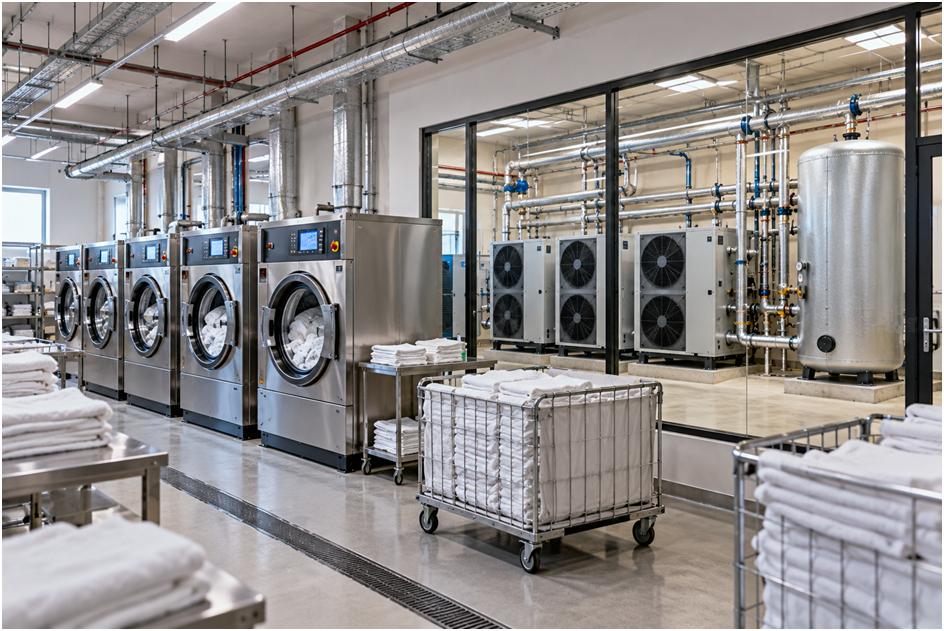
A heat pump for commercial laundry can supply wash water efficiently, but only if it matches your wash temperature, peak cycles and storage. Plan demand from kilograms washed first, then check each model's output temperature before you buy.
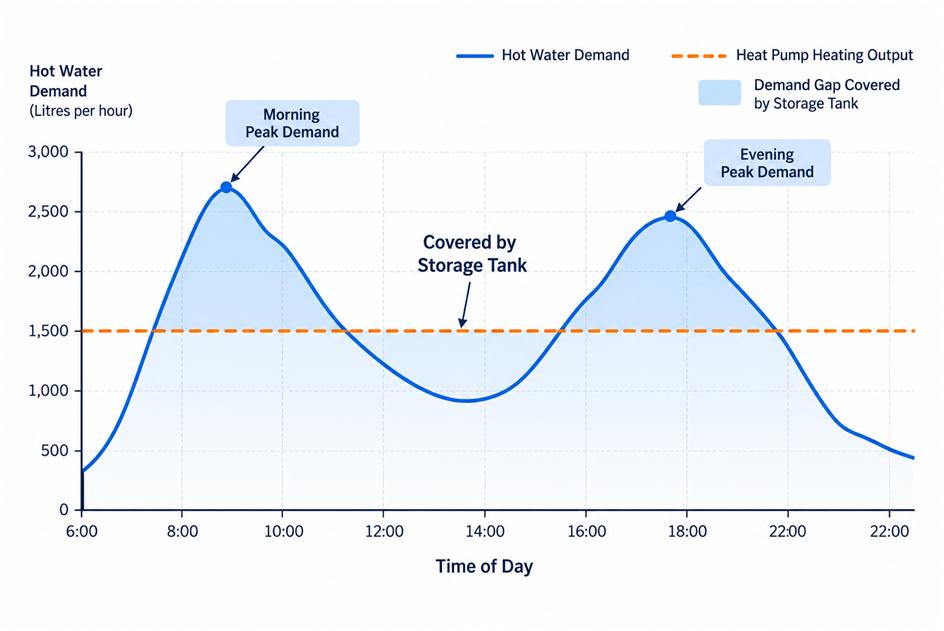
Laundries draw hot water in bursts. Morning loads, hotel checkouts and weekend rushes can empty a tank in minutes. A commercial laundry water heating system built on average use alone will run short at the worst moment.
This guide shows how to estimate demand, match temperatures, size storage and compare heating options.
Water use depends on machine type and region, so use your own data sheets. A TexCare article dated 20 August 2026 reports washer-extractors at 10 to 15 litres per kg in Europe, 17 to 22 in Australia and 17 to 33 in the United States. Continuous batch washers use less, from 4 to 17 litres per kg. The same article notes that rewashing doubles water use per kg.
Your machine data beats any regional average. Even a week of logged loads shows your real pattern and your busiest day.
Multiply litres of hot water by the temperature rise, then by 0.00116 to get kilowatt-hours of heat. That is the energy needed per day before any system losses. Work it out for your average day and for your busiest day. The busiest day decides your plant size. Also note how many machines fill at once and how long each fill takes, because peak draw matters as much as the daily total.
These inputs are assumptions. Replace them with your own before sizing anything, and add allowance for pipe and tank losses.
Requirements depend on your wash programs, linen type, chemicals and hygiene standard. For healthcare linen, a March 2026 presentation from the Wisconsin Healthcare-Associated Infections Prevention Program says at least 160°F (about 71°C) for at least 25 minutes is commonly recommended for hot-water washing. It adds that chlorine bleach activates at roughly 135 to 145°F (57 to 63°C). Hyundai's RS Series delivers up to 60°C, so it cannot reach 71°C on its own.
If a program needs more than 60°C, a heat pump may preheat water while the machine's own heater finishes the job. Confirm that setup with the machine maker and the Hyundai team.
Heat pumps heat water steadily, while laundries draw it in bursts. A storage tank bridges the gap, so you can size heating nearer to average demand than to peak. Hyundai recommends buffer tanks to store enough hot water for peak periods. Without storage, you would need a much larger plant for a few busy hours.
Hyundai's commercial RS Series heat pump cascades up to 16 units from 18 kW to 192 kW under one control. Its glass-lined tanks come in 100 to 300 litres, so ask about storage volumes for larger demand.
It depends on your hours, tariff and wash temperatures. A heat pump typically delivers three to four units of heat per unit of electricity (COP 3 to 4), while an electric element delivers one. Longer operating hours give a heat pump more time to repay its cost. Compare options on cost per kWh of heat, using your own tariff.
| Feature | Heat Pump (RS Series) | Electric Heater | Fuel Boiler |
|---|---|---|---|
| Heat per unit of electricity | COP 3–4 typical | 1 unit | Not applicable |
| Maximum output temperature | Up to 60°C | Model dependent | Model dependent |
| Gas line or flue needed | No | No | Yes |
| Best for | Long hours, steady demand, preheating | Small or occasional loads | Very high temperature needs |
Our heat pump ROI calculator guide explains the inputs, and the cost saving page covers efficiency basics. For scale differences, read domestic vs commercial heat pump water heaters.
Q: Does every laundry program need hot water? No. Many programs use warm or cold fill, and chemistry varies. Check each program sheet, because the hot share drives your demand figure.
Q: Can a heat pump heat water for a commercial laundry? Yes, within its output temperature. Hyundai's RS Series delivers up to 60°C. Confirm that matches your wash programs.
Q: Can it reach thermal disinfection temperatures? Not alone. A commonly recommended healthcare benchmark is 160°F (about 71°C), above the 60°C output. Ask the team about preheating arrangements.
Q: How do I size a laundry hot water system? Calculate daily litres of hot water and temperature rise, then check peak hours and storage. Request a project-specific assessment.
Q: Can I monitor it remotely? The RS Series includes MODBUS RS-485. Read our heat pump BMS integration guide and confirm available data points.
Good laundry hot water planning starts with kilograms washed, not equipment. Calculate demand, confirm temperatures program by program, then size heating and storage together. An energy-efficient system suits steady, long-hours demand, but only a site-specific calculation proves the savings.
Planning a laundromat or commercial laundry hot water system? Send your machine list, wash programs and operating hours to a Hyundai heat pump specialist for a project-specific assessment.
No related articles found.
Heat Pumps for Data Centers: Turning Waste Heat into a Useful Energy Source
2 November 2026
Heat Pump for Car Wash Businesses: Hot Water and Operating Costs
28 October 2026

Heat Pump BMS Integration: A Smarter Approach to Commercial Heating Control
16 October 2026

Heat Pump for Food Processing Industry: Where Heat Recovery Can Improve Plant Efficiency
16 October 2026
Heat Pump for Textile Industry: Opportunities for Heat Recovery in Textile Manufacturing
29 September 2026
Heat Pump for Apartments: How to Plan an Efficient Centralized Hot Water System
24 September 2026
No related articles found.