Author: Hyundai Heat Pump
Published on: 16 November 2026
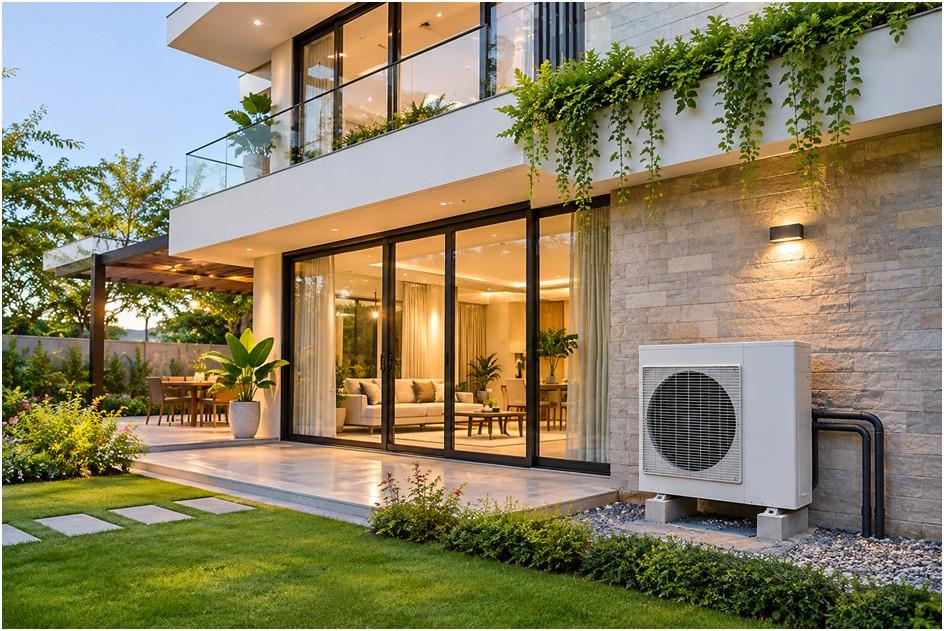
Planning a home heating system involves more than selecting a heat source. The radiators, floor construction, insulation and room layout all affect how effectively heat reaches living spaces.
A heat pump for home heating can work with a water-based heating distribution system, but the right configuration depends on the property and its heating requirements.
This guide explains how radiators, underfloor heating, flow temperature and building design influence residential heat pump projects.
A heat pump for home heating transfers thermal energy from outdoor air into a building's water-based heating circuit. The heated water then supplies compatible radiators, underfloor heating pipes or other suitable emitters.
Unlike a conventional electric resistance heater, an air-source heat pump uses a refrigeration cycle to move heat. Electricity powers the compressor and other components.
In an air-to-water configuration, the system heats water that circulates through the building. The selected indoor distribution system then transfers this heat into individual rooms.
A typical residential installation involves several connected components:
The complete system must work together. Selecting equipment without assessing the distribution network can create design problems later.
Yes, radiators can work with an air source heat pump for home heating when their heat output matches the building's requirements at the system's operating temperature.
However, existing radiators are not automatically compatible. Their size, surface area, room heat demand and water temperature must be assessed before connecting a heat pump.
Traditional boiler systems may operate at higher water temperatures. Heat pumps are generally designed to achieve efficient operation at lower flow temperatures.
An existing radiator installation deserves a room-by-room assessment.
If existing radiators cannot deliver sufficient heat, resizing or replacing selected units may be necessary.
The objective is not simply to retain existing equipment. It is to create a heating arrangement that meets the property's actual requirements.
Yes. A heat pump for underfloor heating can be a suitable combination because floor heating systems generally distribute heat across larger surfaces and can operate with relatively low water temperatures.
Underfloor heating uses pipes beneath the floor finish to distribute warmth across a room. This creates a different heat distribution arrangement from conventional wall-mounted radiators.
It is particularly worth considering during new construction, major renovations and projects where floor build-up can be planned from the beginning.
The system must account for floor construction, insulation, floor coverings and room-specific heating requirements.
Underfloor heating also requires coordination with flooring contractors and other building services. Early planning helps avoid unnecessary changes after flooring and interior finishes are complete.
Flow temperature is the temperature of water leaving the heat pump and entering the heating circuit. It affects the heat delivered by radiators or underfloor systems and influences overall system efficiency.
Lower-temperature heating arrangements can support efficient heat pump operation. However, the required temperature depends on the building's heat loss and the selected emitters.
For example, a radiator system may need different operating conditions from a properly designed underfloor heating installation.
The heating designer should calculate the required output instead of choosing temperatures based on general assumptions.
Correct temperature planning helps balance comfort, equipment operation and energy consumption. It also helps determine whether existing radiators can remain or require modification.
Insulation directly affects how much heat a property loses through its walls, roof, floors, windows and doors. A well-insulated building generally needs less heating input to maintain its desired indoor temperature.
This matters when selecting a heat pump because equipment capacity must match the building's calculated heating load.
A poorly insulated property may need larger heating emitters or improvements to its building envelope before final equipment selection.
A heating assessment should consider the complete property rather than its floor area alone.
For architects and developers, insulation planning should begin during the building design stage. This creates a better foundation for selecting the heating equipment and distribution system together.
Yes. A suitably designed hydronic heating system can distribute heat across multiple rooms using separate heating circuits and appropriate controls.
However, different rooms may have different heating requirements. Bedrooms, living areas, bathrooms and larger open spaces do not always need identical heating schedules or output.
Zoning helps manage these differences by dividing the property into independently controlled heating areas.
Zoning allows the system designer to account for different occupancy patterns and comfort requirements.
For larger homes and multi-storey properties, zoning should be included in the initial system design. The final arrangement must also follow the heat pump manufacturer's hydraulic and control requirements.
Architects and developers should evaluate the building design, heating load, available installation space and distribution method before specifying a heat pump.
This is especially important for premium residences, villas and multi-unit developments where heating requirements can differ across buildings and occupancy types.
The heating system should be considered alongside plumbing, electrical infrastructure and interior planning.
A coordinated specification can reduce installation conflicts and improve project planning.
Developers should also consider future servicing and accessibility. A technically suitable system needs a practical installation and maintenance plan to support long-term building operation.
Hyundai's BLN Series air-to-water heat pump is a relevant product range to evaluate for residential heating and cooling applications.
The official product page lists 6kW, 10kW and 14kW configurations, with R32 refrigerant, full DC inverter technology and a Panasonic compressor and fan motor.
The product information also describes its connection with water-based heating systems, including radiators and underfloor heating. Final compatibility depends on the complete project design.
The published specifications provide useful starting points for technical discussions.
Explore the Hyundai Air-to-Water Heat Pump BLN Series for product details and available configurations.
The right selection should follow a technical assessment, not a general floor-area estimate.
A successful residential heating project begins with accurate building information. The designer needs to understand the property's heat loss, existing distribution system and operating requirements before recommending equipment.
This assessment is equally important for new developments and existing homes undergoing heating upgrades.
These details help establish whether the proposed configuration suits the property.
For project-specific guidance, homeowners and building professionals can contact Hyundai Heat Pumps with their requirements.
1. Can a heat pump work with existing radiators? Yes. Existing radiators may work with a heat pump if their output meets the room's heating requirements at the proposed water temperature. A professional assessment should confirm compatibility.
2. Is underfloor heating better than radiators for heat pumps? Underfloor heating can operate effectively at lower water temperatures because it distributes heat across a larger surface. Radiators can also work when correctly sized for the required output.
3. What is the ideal flow temperature for a heat pump? There is no universal ideal temperature. It depends on the heat pump model, building heat loss, radiator sizing and underfloor heating design.
4. Can an air-to-water heat pump provide heating and cooling? Yes, compatible reversible air-to-water systems can provide both. They circulate heated or cooled water through suitable distribution equipment. Cooling requires appropriate system design and condensation management.
5. What size heat pump does a residential property need? The required capacity depends on room-by-room heat loss, insulation, climate, building layout and heating requirements. A professional heat-loss calculation helps determine suitable equipment capacity.
6. Can a heat pump serve a large villa? Yes, a suitably designed system can serve larger residential properties. Equipment capacity, hydraulic distribution, zoning and control requirements must be assessed before installation.
Choosing a heat pump for home heating requires a complete understanding of the building and its heating distribution system. Radiators, underfloor heating, insulation and flow temperature all influence system design.
For architects, developers and homeowners, early technical planning can help avoid compatibility issues and unnecessary installation changes.
Hyundai's air-to-water heat pump range offers a product option worth evaluating for residential heating and cooling projects.
Planning a residential heating project? Explore Hyundai's air-to-water heat pump solutions and discuss your project requirements with the team.
No related articles found.

Commercial Swimming Pool Heat Pump: How to Manage Heating Demand Across Different Seasons
16 November 2026
Heat Pumps for Data Centers: Turning Waste Heat into a Useful Energy Source
2 November 2026
Heat Pump for Car Wash Businesses: Hot Water and Operating Costs
28 October 2026
Heat Pump for Commercial Laundry: Planning Hot Water Capacity and Demand
28 October 2026

Heat Pump BMS Integration: A Smarter Approach to Commercial Heating Control
16 October 2026

Heat Pump for Food Processing Industry: Where Heat Recovery Can Improve Plant Efficiency
16 October 2026
No related articles found.