Author: Hyundai Heat Pump
Published on: 16 November 2026
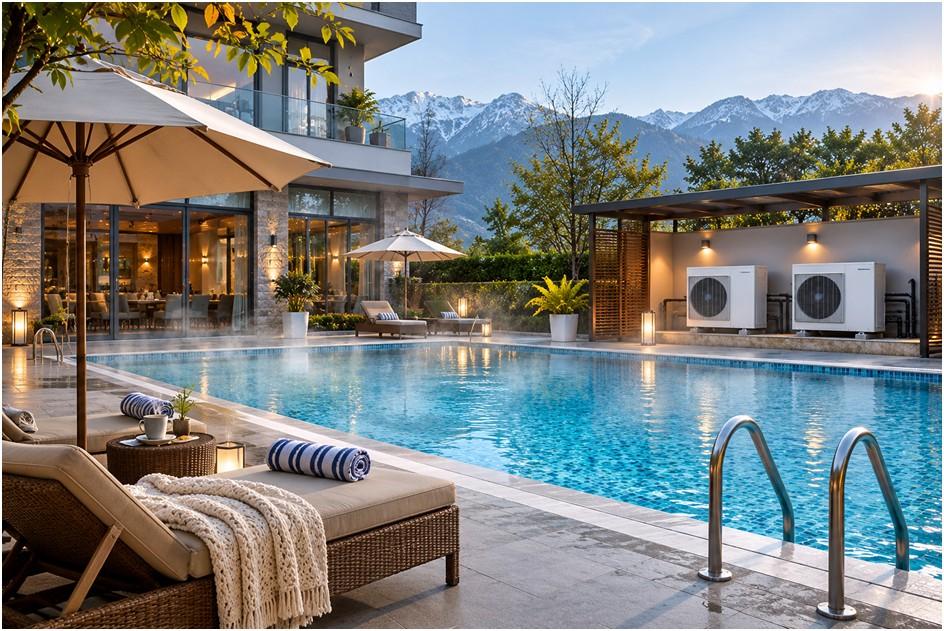
A swimming pool is more than an additional facility at a hotel, resort or sports club. It can be an important part of the guest experience and a valuable year-round amenity. However, maintaining a comfortable water temperature across changing weather conditions requires careful planning.
For commercial facilities, pool heating is not simply about warming the water once. It involves managing heat loss, operating hours, changing outdoor temperatures and daily usage patterns. A pool that receives heavy use during weekends or holiday seasons may have very different heating requirements from one used mainly for scheduled swimming sessions.
A commercial swimming pool heat pump can help facility managers maintain more consistent water temperatures while managing energy consumption. The right system, however, must be selected according to the pool's design, operating schedule and local climate.
This guide explains how commercial pool heating demand changes throughout the year and what businesses should consider when planning a reliable heating system.
Commercial swimming pools often operate under more demanding conditions than residential pools. Hotels, resorts, fitness centres and sports clubs may need to maintain suitable water temperatures for several hours every day.
Temperature fluctuations can affect both user comfort and facility operations. For example, hotel guests may expect a comfortable swimming experience even during cooler months. Sports clubs may need predictable water conditions for regular training sessions, while resorts may want to keep their pools usable beyond the main summer season.
Consistent temperature management helps facilities:
The objective is not to heat the pool continuously at maximum output. It is to maintain the required temperature with a heating schedule that reflects actual usage and changing environmental conditions.
Outdoor swimming pools are directly exposed to weather conditions. As air temperature, wind and humidity change, the amount of heat lost from the water also changes.
This means a commercial pool heating system must be planned around seasonal conditions rather than a single annual temperature estimate.
During warmer months, outdoor pools may receive considerable heat from sunlight. Depending on the location, pool temperature may remain close to the desired setting without extensive heating.
However, high temperatures do not automatically eliminate the need for temperature control. Shaded pools, indoor pools and facilities with specific temperature requirements may still need active management.
Facility managers should monitor water temperature and adjust operating schedules according to actual conditions. Heating should not continue unnecessarily when the pool has already reached its target temperature.
Monsoon weather can make pool temperature less predictable. Rainfall may cool the water, while wind increases heat loss from the pool surface.
Cloud cover can also reduce solar heat gain. As a result, a pool that requires limited heating during a sunny period may need additional heating during extended rainy weather.
Hotels and resorts that promote year-round pool access should account for these changing conditions when planning their heating capacity and operating schedule.
Winter generally creates the greatest heating challenge for outdoor commercial pools, particularly in northern and central parts of India.
When the surrounding air becomes colder, the temperature difference between pool water and the environment increases. Heat loss through evaporation, convection and radiation can become more significant.
Facilities may need longer heating periods to maintain their preferred water temperature. Pre-heating before opening hours can also help ensure that the pool is ready when guests or members arrive.
The important point is to plan for the site's actual winter conditions rather than relying only on average annual temperatures.
Pool size is often discussed in terms of water volume, but surface area is another important factor when evaluating heating requirements.
The water surface is where much of the heat exchange with the surrounding environment takes place. A larger exposed surface gives more opportunity for heat loss, particularly through evaporation.
Consider two commercial pools with similar water volumes but different shapes. One may be deeper and more compact, while the other may be shallower and spread across a wider area. Their heating requirements may differ because their exposed surface areas are not the same.
When assessing a commercial swimming pool heat pump, facility managers should consider:
A professional site assessment should consider these factors together. Selecting equipment using pool volume alone may overlook important sources of heat loss.
A pool cover is one of the practical measures that can support an energy-efficient pool heating strategy.
When a swimming pool remains uncovered, water continuously evaporates from its surface. Evaporation removes heat from the pool, increasing the amount of energy required to maintain the desired temperature.
A suitable pool cover creates a barrier between the water and surrounding air. It can reduce evaporation and help retain heat, particularly when the pool is not being used.
For commercial facilities, pool covers can be useful during:
The choice of cover depends on the pool's design, safety requirements and operating practices. It should also be practical for staff to install and remove as part of the daily routine.
A heat pump and pool cover perform different but complementary roles. The heat pump adds heat to the water, while the cover helps reduce avoidable heat loss. Using both as part of a planned operating strategy can improve overall temperature management.
A commercial pool's heating requirement depends not only on its physical dimensions but also on when and how frequently it is used.
For example, a hotel pool may open early in the morning and remain available until late evening. A sports club may have fixed training sessions, while a resort may experience higher usage during weekends and holidays.
These operating patterns affect when heating is required. Facility managers should consider three important periods:
Before opening: The pool may need to reach its target temperature before guests or members begin using it. Heating should be scheduled with enough time to prepare the water.
During operating hours: The system needs to respond to ongoing heat loss and changing outdoor conditions while maintaining the selected temperature.
After closing: Heating requirements may change when the pool is covered and usage stops. The system can follow a suitable maintenance schedule rather than operating without considering demand.
A well-planned heating schedule should reflect actual operating hours, expected usage and the time needed to recover temperature after periods of higher demand.
Pool heating demand is not constant throughout the day or across different seasons. Outdoor temperature, wind exposure, pool usage and water temperature can all influence how much heating is required.
This is where inverter technology can be useful.
Inverter-driven heat pumps can adjust compressor operation according to heating demand instead of relying only on repeated full-capacity operation. When the required output changes, variable-speed control can help the system respond more gradually.
Potential operational advantages include:
However, inverter capabilities vary by product and model. Facility managers should check the technical specifications of the equipment being considered rather than assuming that every commercial heat pump uses the same compressor technology.
Hyundai offers different swimming pool heat pump solutions, including inverter swimming pool heat pumps and dedicated commercial swimming pool heat pumps. The most suitable option depends on the pool's requirements and the specifications of the proposed model.
Learn more about Hyundai's heat pump technology and competitive advantages.
Selecting a heating system for a commercial pool requires more than estimating the amount of water that needs to be heated. The entire operating environment should be evaluated before equipment is selected.
Record the pool's surface area, volume, average depth and exposure to wind or sunlight. These details help establish the heating load more accurately.
Different facilities may have different temperature requirements. A hotel leisure pool, a sports training pool and a resort pool may not operate at the same target temperature.
The desired temperature should be established before calculating equipment capacity.
Consider seasonal outdoor temperatures, rainfall, wind exposure and the length of the heating season. A system planned for a warm coastal location may have different requirements from one installed in a colder inland region.
Identify opening hours, peak usage periods, overnight closure and seasonal occupancy patterns. This information helps determine when the pool should be heated and maintained.
Commercial pools require regular water treatment. Chlorine, saltwater systems and other chemicals can affect equipment materials.
A titanium heat exchanger is an important feature to evaluate because titanium offers strong resistance to corrosion in treated pool water. Hyundai's commercial swimming pool heat pump range includes a titanium heat exchanger designed for exposure to chlorine and pool chemicals.
Large hotels and resorts may already use building management systems to monitor energy consumption and coordinate equipment.
A heat pump with MODBUS RS-485 communication can support integration with a compatible building management system. Hyundai's commercial model lists this communication capability, allowing facility teams to consider pool heating as part of a wider building energy-management strategy.
The installation location should provide suitable access for inspection, cleaning and servicing. Facility managers should also confirm the manufacturer's maintenance recommendations and availability of technical support.
The right equipment should match the pool's actual heating demand and expected operating conditions.
Before selecting a commercial swimming pool heat pump, compare the following factors:
| Selection Factor | What to Evaluate |
|---|---|
| Heating capacity | Required output based on pool dimensions and heat loss |
| Operating conditions | Performance under the site's seasonal outdoor temperatures |
| Heat exchanger | Compatibility with treated pool water |
| Control system | Temperature monitoring and automatic operation |
| Multi-unit configuration | Whether multiple units can operate together for larger pools |
| Building integration | Availability of communication such as MODBUS RS-485 |
| Protection features | Pressure monitoring, water-flow monitoring and fault detection |
| Installation | Space, airflow, water connections and service access |
| Support | Warranty, maintenance guidance and authorised service availability |
For large commercial facilities, a multi-unit arrangement may be worth evaluating. It can help match the heating system to a larger requirement and provide flexibility when planning the installation.
Hyundai's Commercial Swimming Pool Heat Pump is designed for applications such as hotels, resorts, aquatic centres and other large facilities. Its listed features include a titanium heat exchanger, automatic defrost, water-flow monitoring, high-pressure protection, MODBUS RS-485 communication and parallel multi-unit configurations.
The final selection should still be based on a site-specific assessment and the technical data for the proposed system.
Commercial pool heating works best when equipment selection and daily operating practices are planned together.
Seasonal weather, exposed water surface, pool covers and operating hours all influence how much heat a pool loses. Understanding these factors helps facility managers make better decisions about equipment capacity, heating schedules and long-term operation.
For hotels, resorts, sports clubs and aquatic facilities, the goal is to maintain a comfortable swimming environment without overlooking energy use or equipment reliability.
Hyundai's commercial swimming pool heat pump range offers features developed for large-scale pool heating, including automatic operation, corrosion-resistant heat exchange and building management system connectivity.
If you are planning a new pool heating installation or reviewing an existing system, contact Hyundai Heat Pumps to discuss your commercial pool requirements.
1. What is a commercial swimming pool heat pump? A commercial swimming pool heat pump is equipment designed to transfer heat from the surrounding air into swimming pool water. It is used in facilities such as hotels, resorts, sports clubs and aquatic centres to maintain the required pool temperature.
2. Why does a commercial swimming pool need consistent temperature management? Commercial pools often have fixed operating hours and regular users. Consistent temperature management helps maintain user comfort, supports planned swimming schedules and reduces unnecessary temperature fluctuations.
3. Does the season affect commercial pool heating requirements? Yes. Outdoor temperature, wind, rainfall and sunlight influence pool heat loss. Heating demand is generally higher during colder periods, while warmer conditions may reduce the amount of heating required.
4. How does a pool cover help reduce heating requirements? A pool cover helps reduce evaporation, which is a major source of heat loss from an exposed water surface. Covering the pool when it is not in use can help retain water temperature and reduce the amount of heat that needs to be replaced.
5. Is pool surface area important when selecting a heat pump? Yes. A larger exposed water surface can increase heat loss through evaporation and interaction with surrounding air. Pool surface area should therefore be considered along with water volume, depth, climate and desired temperature.
6. Can a commercial swimming pool heat pump operate during winter? Commercial heat pumps can be selected for operation under specific outdoor temperature conditions. The suitable model depends on the local winter climate and the manufacturer's stated operating range. Automatic defrost is also a useful feature to evaluate in colder conditions.
7. What is the role of MODBUS in a commercial pool heating system? MODBUS RS-485 allows compatible equipment to communicate with a building management system. This can help facility managers monitor and coordinate pool heating alongside other building systems.
8. What should hotels consider before installing a swimming pool heat pump? Hotels should evaluate pool dimensions, target water temperature, seasonal weather, operating hours, heat loss, equipment capacity, installation space, water chemistry and maintenance requirements before selecting a system.
No related articles found.
Heat Pump for Home Heating: Radiators, Underfloor Heating and System Compatibility
16 November 2026
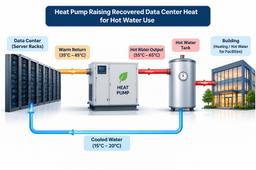
Heat Pumps for Data Centers: Turning Waste Heat into a Useful Energy Source
2 November 2026
Heat Pump for Car Wash Businesses: Hot Water and Operating Costs
28 October 2026
Heat Pump for Commercial Laundry: Planning Hot Water Capacity and Demand
28 October 2026

Heat Pump BMS Integration: A Smarter Approach to Commercial Heating Control
16 October 2026
Heat Pump for Food Processing Industry: Where Heat Recovery Can Improve Plant Efficiency
16 October 2026
No related articles found.