Author: Hyundai Heat Pump
Published on: 02 September 2026
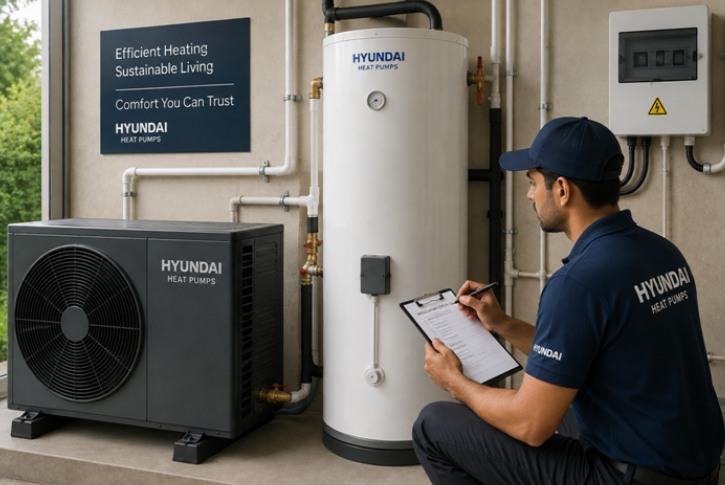
Installing a heat pump water heater involves more than connecting the unit to a water supply. The installation location, airflow, plumbing, electrical supply, storage capacity, and hot-water demand all need to be considered.
For homes, apartments, hotels, hospitals, and commercial facilities, requirements can vary depending on the system and application. Hyundai offers domestic and commercial water-heating solutions, making proper system selection and installation planning important.
This guide explains the heat pump water heater installation process, key heat pump water heater installation requirements, and important factors to consider before commissioning a system.
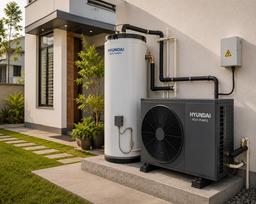
A heat pump water heater installation involves connecting a heat pump system to the building's water and electrical infrastructure. The system transfers heat from surrounding air to the water rather than relying entirely on conventional electric resistance heating.
The exact arrangement depends on the selected model and application. Hyundai offers domestic systems for household hot-water requirements and commercial solutions for larger applications. [Hyundai Heat Pump Products]
Before installation, the required water temperature, storage capacity, daily demand, available space, and electrical supply should be assessed. This helps determine a suitable system for the application.
A suitable installation location is the first requirement. The heat pump needs adequate surrounding space for airflow and access for inspection and servicing.
Key requirements include:
Electrical requirements can differ between domestic and commercial systems, so the supply should always be checked against the selected model's specifications. [Domestic vs Commercial Heat Pump Water Heater]
The heat pump water heater installation process normally begins with a site assessment. The installer reviews hot-water demand, available space, plumbing, electrical supply, and the specifications of the selected system.
The installation area is then prepared and the heat pump is positioned on a suitable base with sufficient clearance. Water-side connections are completed between the heat pump, storage tank, and hot-water distribution system where applicable.
The electrical connection and controls are then completed according to the equipment requirements. Finally, the system is checked for leaks, correct operation, temperature control, and applicable safety functions.
Hyundai's domestic systems include features such as automatic defrost and protection functions. [Domestic Hot Water Heat Pump]
Location can affect airflow, accessibility, and maintenance. The unit should not be installed where airflow is unnecessarily restricted.
Consider:
For commercial installations, additional space may be required for larger equipment, storage tanks, and associated components.
A heat pump water heater works as part of a complete hot-water system, so storage capacity should match expected demand. Household requirements can differ significantly from those of hotels, hospitals, hostels, and other commercial facilities.
The plumbing layout should provide suitable connections between the heat pump, storage tank, and points of use. Pipe sizing, insulation, valves, and other components should be selected according to the system design.
Hyundai also offers storage solutions, including glass-lined tanks, within its product range. [Hyundai Heat Pump Products]
Electrical planning is an important part of any heat pump water heater setup. The available supply should be checked against the selected model's rated requirements before installation.
Important checks include:
Domestic and commercial systems can have different electrical requirements, so the exact model specifications should always be verified before connection. [Domestic vs Commercial Heat Pump Water Heater]
Capacity should be selected according to actual hot-water demand rather than simply choosing the largest available system.
For residential applications, consider:
For commercial applications, also consider occupancy, operating hours, peak demand, and the required hot-water supply.
Hyundai's domestic range includes different capacities, while its commercial solutions address larger hot-water requirements. [Domestic Hot Water Heat Pump]
Domestic and commercial installations can differ considerably in terms of capacity, storage, electrical requirements, controls, and overall system design.
Hotels, hospitals, hostels, and other facilities may experience higher or more variable hot-water demand. Their systems should therefore be designed around actual consumption patterns.
Hyundai provides both domestic and commercial water-heating solutions for different applications. [Domestic Commercial Water Heat Pump]
For larger projects, a professional assessment is particularly important before finalising the system configuration.
Avoiding basic installation mistakes can help create a more practical and serviceable system.
Following the manufacturer's installation requirements is essential for the selected model.
A heat pump combines refrigeration technology, water circulation, electrical components, and temperature controls. Correct installation therefore requires more than connecting water and electrical lines.
Professional installation helps ensure that the selected equipment is appropriate for the application and that the system is installed according to its technical requirements.
This becomes especially important for commercial projects where multiple components may work together. Hyundai supports heat pump applications across domestic and commercial requirements. [About Hyundai Heat Pumps]
Customers can explore the Hyundai Heat Pump Products to understand the available solutions.
How long does heat pump water heater installation take? Installation time depends on the model, site conditions, plumbing, electrical work, and whether additional storage or circulation components are required.
Where should a heat pump water heater be installed? It should be installed where there is adequate airflow, suitable drainage where applicable, and sufficient access for inspection and maintenance.
What are the main heat pump water heater installation requirements? The main requirements include a suitable location, water connections, adequate electrical supply, sufficient airflow, appropriate storage capacity, and service access.
Can a heat pump water heater replace a conventional geyser? It can serve hot-water requirements that may otherwise be handled by a conventional water heater. Suitability depends on the application's demand, available space, electrical supply, and system requirements.
How do I choose the right heat pump capacity? Capacity should be based on factors such as users, hot-water consumption, peak demand, required temperature, and whether the application is residential or commercial.
Do heat pump water heaters require maintenance? Yes. The system should be inspected and maintained according to the manufacturer's recommendations to help identify potential issues with connections, airflow, controls, and other components.
Before starting the installation:
A properly planned heat pump water heater installation can create a practical hot-water solution that is easier to operate, inspect, and maintain.
For more information, explore Hyundai's Domestic Water Heat Pump R32, Domestic Water Heat Pump R410A, and Domestic Commercial Water Heat Pump solutions.
No related articles found.
Heat Pump for Hospitals: A Guide to Reliable and Energy-Efficient Hot Water Systems
11 September 2026
Heat Pump for Hotels: How to Reduce Hot Water Energy Costs Without Compromising Guest Comfort
10 September 2026
Heat Pump Maintenance Guide: How to Keep Your System Efficient and Reliable
02 September 2026
Heat Pump Water Heater for Home: How to Choose the Right System for Your Household
02 September 2026

Dehumidifier vs Air Conditioner: Which Is Right for You?
24 July 2026
What Are Industrial Heat Pumps and How They Work
24 July 2026
No related articles found.