Author: Hyundai Heat Pump
Published on: 11 September 2026
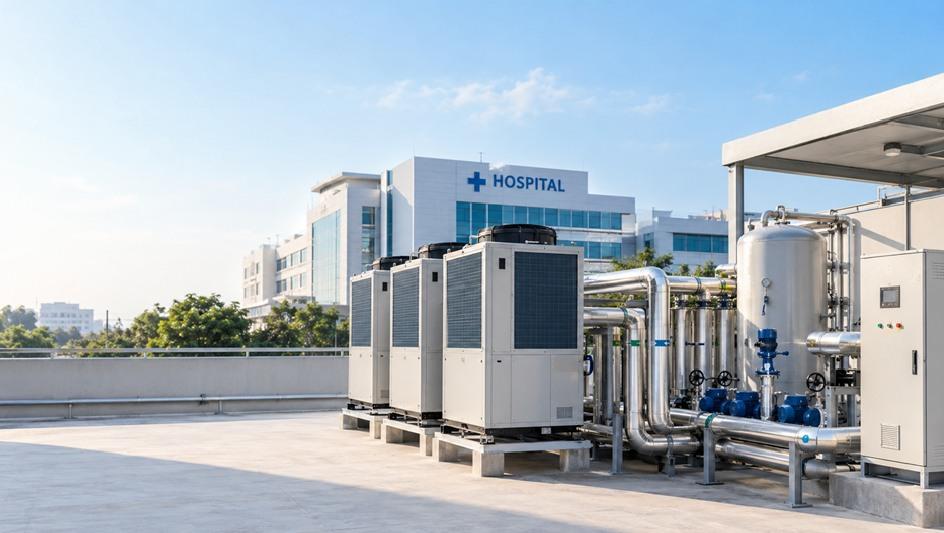
A heat pump for hospitals delivers the consistent 60°C hot water infection control demands, with the redundancy for zero-downtime uptime — at a fraction of the running cost of diesel or electric systems.
A hospital's hot water system doesn't get to have an off day. It runs behind patient baths, sterilization processes, dialysis units, and disinfection protocols around the clock, with zero tolerance for downtime or inconsistent temperature.
Here's how a heat pump for hospitals meets that demand reliably, while cutting the energy costs that come with running 24/7.
Hospitals are switching to heat pumps because they deliver the consistent, high-volume hot water hospitals require at a fraction of the running cost of diesel boilers or electric systems. Unlike hotels or homes, hospital demand doesn't taper off overnight, which makes running efficiency a constant factor rather than an occasional one.
A commercial heat pump moves heat from ambient air into water instead of generating it directly, delivering roughly three to five units of usable heat for every unit of electricity consumed. For a facility running hot water demand continuously, that efficiency gap compounds significantly over a full year.
Health authorities including the CDC and WHO recommend storing hospital hot water above 60°C and distributing it at no less than 50°C to prevent Legionella bacteria from growing in the system. This isn't a comfort preference; it's a documented infection-control requirement specific to healthcare facilities.
Legionella grows fastest between roughly 25°C and 45°C, a range ordinary lukewarm water sits in far too easily if a heating system can't maintain consistent output.
Meeting this threshold consistently, not just occasionally, is the baseline requirement any hospital hot water system needs to clear.
Yes, commercial heat pump systems built for healthcare use can deliver hot water consistently at up to 60°C across every outlet, which directly aligns with infection-control temperature requirements. This output needs to hold steady across multiple wings and fixtures running simultaneously, not just at a single tap.
A hospital in Hyderabad running Hyundai's commercial RS Series across two wings reported consistent 60°C delivery alongside scheduled disinfection cycles, according to the facility's own account on the manufacturer's site. Results vary by facility size, existing infrastructure, and water demand pattern, but consistent output at this exact threshold is the specific technical requirement healthcare buyers should verify before choosing any system.
Cascade heat pump systems provide hospital-grade reliability by running multiple smaller units together, so if one unit needs servicing, the others continue supplying hot water without interruption. This built-in redundancy matters far more in a hospital than in most other commercial settings.
A single point of failure in hot water supply affects sterilization, patient bathing, and disinfection protocols simultaneously, which is exactly the scenario cascade design is built to prevent.
This redundancy is what separates a system suitable for a hospital plant room from one designed for lighter, less critical use.
Hospital sizing depends on bed count, department mix, and peak simultaneous demand across wings, but most mid-sized facilities require a cascaded system in the 60 to 150 kW range. Departments like dialysis, maternity, and sterile processing each add distinct demand patterns that a single flat estimate can't capture.
Getting an accurate load calculation from a technical team, rather than estimating from bed count alone, is worth the extra step given how much infection-control performance rides on the system meeting actual peak demand.
Yes, commercial heat pump systems with MODBUS communication can integrate directly with a hospital's building management system, allowing scheduled disinfection cycles and centralized monitoring across departments. This turns temperature control from a manual checklist item into an automated, trackable process.
A hospital running this kind of integration can schedule thermal disinfection routines alongside routine monitoring, rather than relying on staff to manually verify temperatures across multiple outlets. Hyundai's commercial RS Series includes MODBUS RS-485 communication as a standard feature specifically for this kind of BMS integration.
A well-engineered commercial heat pump keeps operating noise low through inverter compressors and anti-vibration mounting, which matters when plant rooms sit near patient wards or recovery areas. Quiet operation isn't just a comfort feature in a hospital setting; it directly affects patient rest and recovery.
Hyundai's CozyQuiet low-noise engineering applies inverter and anti-vibration design principles across its range, which is worth reviewing specifically for plant rooms positioned close to occupied clinical spaces.
Q: What water temperature do hospitals need to maintain for infection control? Health authorities recommend storing hot water above 60°C and distributing it at no less than 50°C to prevent Legionella growth in healthcare facility plumbing.
Q: Can a heat pump system handle a hospital's continuous hot water demand? Yes, when sized correctly with a cascaded configuration, commercial heat pumps deliver consistent output across departments running simultaneous demand around the clock.
Q: What happens if one unit in a hospital's heat pump system fails? Cascade systems are designed so remaining units continue operating while one unit is serviced, avoiding a full supply interruption.
Q: How much can a hospital save switching from a diesel boiler to a heat pump? Commercial heat pumps commonly cut hot water energy costs by 65 to 75 percent compared to diesel boilers, with payback often achieved within two years.
Q: Can a hospital's heat pump system integrate with its building management system? Yes, most commercial systems support MODBUS communication, allowing scheduled disinfection cycles and centralized monitoring alongside other hospital BMS functions.
Q: Will the outdoor plant room noise affect patient wards nearby? Systems built with inverter compressors and anti-vibration mounting keep operating noise low enough that placement near clinical areas is generally manageable with sensible installation.
A heat pump for hospitals needs to clear a higher bar than most commercial applications: consistent 60°C output for infection control, built-in redundancy for zero-downtime reliability, and integration with existing hospital systems. Getting the sizing and infection-control specification right at the planning stage is what makes all three possible together.
Evaluating a new installation or replacing aging boiler infrastructure? Contact Hyundai Heat Pump India's team for a capacity assessment based on your facility's department mix and peak demand.
No related articles found.
Heat Pump for Hotels: How to Reduce Hot Water Energy Costs Without Compromising Guest Comfort
10 September 2026
Heat Pump Maintenance Guide: How to Keep Your System Efficient and Reliable
02 September 2026
Heat Pump Water Heater for Home: How to Choose the Right System for Your Household
02 September 2026
Heat Pump Water Heater Installation: Requirements, Process and Key Considerations
02 September 2026

Dehumidifier vs Air Conditioner: Which Is Right for You?
24 July 2026
What Are Industrial Heat Pumps and How They Work
24 July 2026
No related articles found.